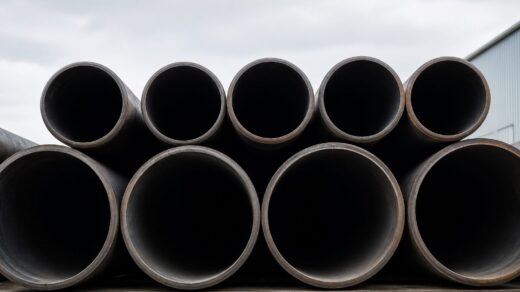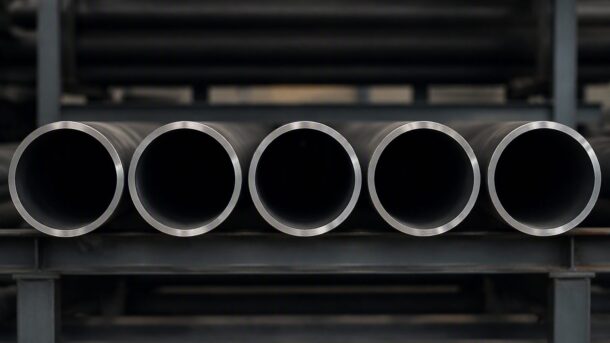
I have lost count of the enquiries that start with “carbon steel pipe, please quote” and nothing else. The pipe is the easy part; the manufacturing method is where the spec actually lives. ERW, seamless, and LSAW pipes all carry carbon steel chemistry, all come with mill certificates, and all are the wrong choice somewhere. Over fifteen years of buying pipe for infrastructure projects, I have learned that the question is never “which is the best steel pipe” — it is “which route fits the diameter, the pressure, the budget, and the inspection regime your project demands.” This is how I work through that choice.
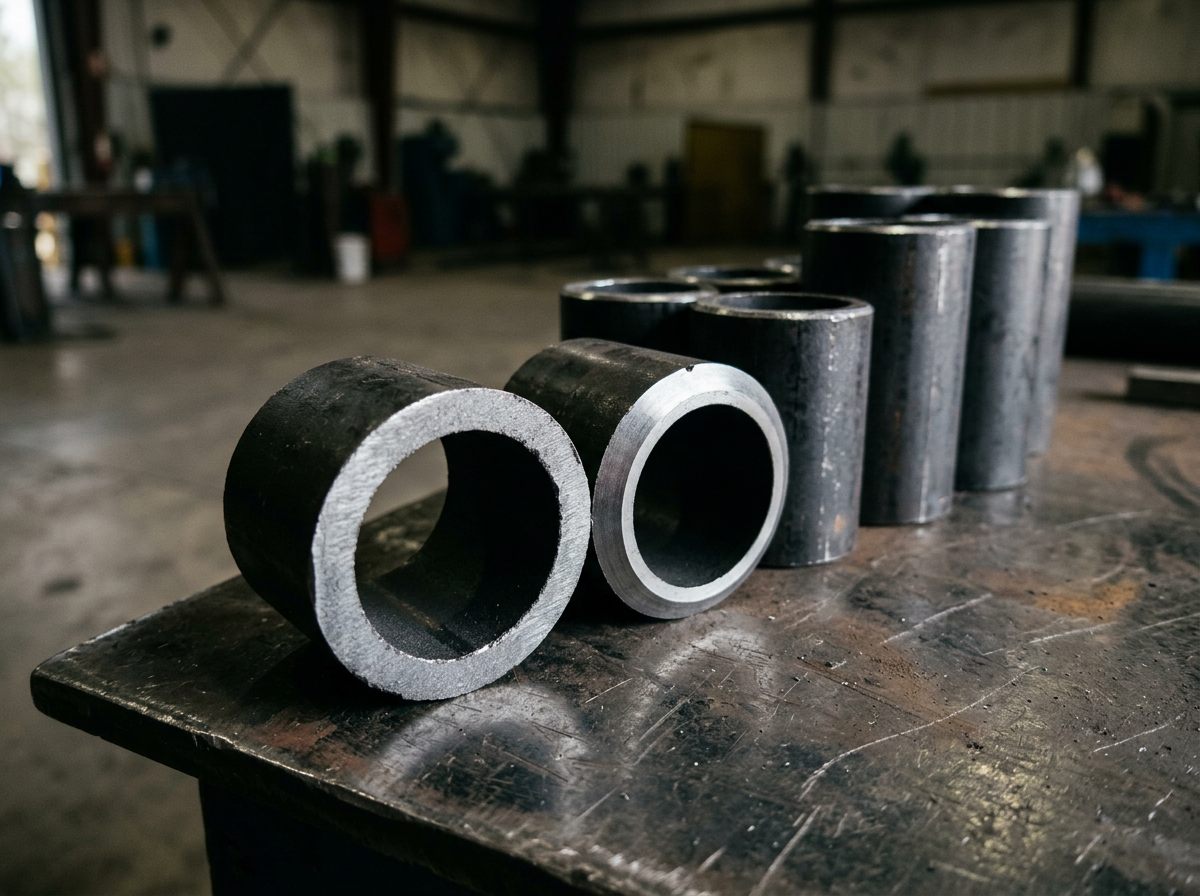
Three manufacturing routes, one question
All three processes start from the same family of hot-rolled steel, but they become pipe in fundamentally different ways, and the seam — or the absence of one — drives almost every downstream decision.
ERW (electric resistance welded). Coiled strip is roll-formed into a cylinder and its two edges are joined by high-frequency electric resistance welding. The weld is a forged bond with no added filler metal, and in a good mill the weld zone is tested, normalized, and barely visible after processing. ERW is the volume workhorse of the pipe world: fast production, competitive pricing, and typical outside diameters from about half an inch up to roughly 24 inches.
Seamless. A solid round billet is heated and pierced to form a hollow shell, then rolled and stretched to final size — no longitudinal weld exists anywhere in the wall. Because the whole circumference is parent material, seamless pipe is the default where pressure, temperature, or fatigue make a weld zone unacceptable. The trade-off is cost and lead time: seamless is slower to make and typically the most expensive of the three routes per ton.
LSAW (longitudinally submerged arc welded). Heavy steel plate is edge-prepared, formed into a cylinder, and welded along one longitudinal seam with submerged arc welding — usually from both the inside and the outside (which is why you will also hear the term DSAW). Plate input means LSAW starts where strip-based ERW ends, commonly from roughly 16 inches in diameter upward, and it is the standard route for large-diameter transmission pipelines and heavy structural duty.
ERW: the workhorse, with a seam you should respect
ERW is what most structural and general-service pipe is made from, and much of it is specified under ASTM A53 or ASTM A36 — the A36 ERW structural pipe used in racks, frames, and fences, and the A53 pipe used across water, air, and general pressure services. It is also an accepted manufacturing route under API 5L for line pipe in a wide range of grades, from Grade B up through the X-grades.
Three things make ERW the default in my purchase orders:
- Cost and lead time. Coil-fed production keeps per-ton cost and delivery time well below seamless, which matters when you are buying in project quantities.
- Consistent geometry. Modern high-frequency welding produces pipe with tight diameter and roundness tolerances, which makes fit-up on site faster.
- A testable weld. Reputable mills run the weld zone through eddy-current or ultrasonic testing as part of production, and hydrostatic testing verifies every length. Ask for those reports; they should travel with the MTC.
The respect part: the seam is still a seam. For highly corrosive, sour, or high-cycle-fatigue services, buyers routinely step up to seamless or specify additional NDT — and some project specs will not allow ERW at all. Read the spec before you assume.
Seamless: when the seam cannot exist
ASTM A106 (Grades A, B, and C) is the specification you will see on most seamless carbon steel pipe bought for high-temperature and high-pressure service — boiler and heat-exchanger duty, power and process lines, and anywhere a weld zone would be a liability under cyclic loading. Seamless pipe is also common in the smaller-to-medium diameter range where it is produced efficiently.
What you pay for with seamless is uniform wall integrity around the full circumference. There is no seam to inspect, no weld to derate, and the pipe can be specified against the most demanding pressure and temperature calculations. That premium is justified when the service demands it, and wasted when it does not — putting seamless on a fence-line structural order is how budgets die quietly.
LSAW: big diameters, big pipelines
When the project calls for a 30-inch or 48-inch transmission line, strip-based ERW is out of its range and seamless is economically impossible. That is LSAW territory. Starting from plate gives LSAW mills the ability to reach diameters well beyond 24 inches while keeping wall thickness controlled through heavy sections — which is why large-diameter API 5L line pipe, offshore risers, and structural piles are almost always LSAW or its spiral cousin SSAW.
Because LSAW welds are made with submerged arc from both sides, the weld is deep, dense, and radiographically inspectable, and long-distance pipeline specifications routinely require 100% ultrasonic or radiographic examination of the seam. It is not a cheap pipe, but at large diameters there is often no practical alternative.
How to choose: a buyer’s decision table
| Decision factor | ERW | Seamless | LSAW |
|---|---|---|---|
| Typical diameter range | ~1/2″ – 24″ | ~1/4″ – 24″ (larger sizes costly) | ~16″ and up |
| Typical specs | ASTM A53, A36; API 5L | ASTM A106; API 5L; A53 | API 5L; structural/line pipe |
| Weld seam | Longitudinal HF weld | None | Longitudinal SAW (inside + outside) |
| Relative cost per ton | Lowest | Highest | High (large dia.) |
| Lead time | Shortest | Longest | Medium-long (plate-based) |
| Typical duty | Structural, water, general pressure | High-temp / high-pressure, boiler & process | Transmission lines, heavy structural, offshore |
| Key inspection | Eddy current / UT on weld + hydro | Hydrostatic; UT as specified | 100% UT or RT on seam (pipeline spec) |
Work the decision with four questions:
- What diameter and wall do you actually need? The size range alone usually eliminates one or two routes.
- What pressure and temperature will the line see? High pressure or high temperature pushes you toward seamless (or LSAW with full inspection at large size).
- What does the project specification require? Many specs name the manufacturing route outright — A106 for process lines, A53 or API 5L for distribution, A36 for structural — so read clause one before comparing prices.
- What inspection regime is attached? If the spec demands full radiographic testing of every seam, factor that into the ERW versus seamless decision rather than discovering it at the port.
Do not forget the paperwork
Whatever route you choose, the documents are half the purchase. Every shipment should carry a mill test certificate to EN 10204 3.1 — check that the heat number, grade, chemistry, and mechanical values on the certificate match the stenciling on the pipe. Hydrostatic test reports, NDT reports for welded pipe, and dimensional records (outside diameter, wall thickness, straightness) should all be available before money moves. A cheap pipe with unverifiable paperwork is the most expensive pipe you will ever buy, because it will not clear a project’s vendor approval.
FAQ
Is ERW pipe as strong as seamless?
For most structural and general pressure service, yes — specified grades are met either way. The difference is not headline strength but weld-zone behaviour under severe conditions: high temperature, sour or corrosive service, and cyclic loading are where seamless earns its keep.
Can ERW pipe be used under API 5L?
Yes. API 5L explicitly covers electric resistance welded line pipe alongside seamless and SAW routes, across PSL1 and PSL2 requirements. Check the grade, the PSL, and the supplementary testing the project calls for.
Why is seamless pipe so much more expensive?
Because it starts from a solid billet and is pierced and rolled rather than formed from strip. Slower throughput and higher material loss per ton make it cost more — which is why specifying it for jobs that do not need it is the most common budget mistake I see.
What is the difference between LSAW and SSAW?
Both are submerged arc welded from plate. LSAW welds along a single longitudinal seam; SSAW (spiral) welds along a helical seam. Longitudinal seams are generally preferred for long-distance line pipe service; spiral pipe is often used for lower-pressure large-diameter water and structural duty.
Do I need X-ray testing on welded pipe?
Only if your spec says so — but for critical service, treating weld inspection as optional is a gamble. Production NDT (eddy current or ultrasonic on ERW) and project-specified radiographic testing of LSAW seams are the two inspection layers that separate mill-grade pipe from project-grade pipe.
Bottom line
- Match the route to the service: ERW for structural and general duty, seamless for high pressure and high temperature, LSAW for large-diameter transmission and heavy structural work.
- Let the size range, the project spec, and the inspection regime narrow the field before you compare price.
- The certificate is part of the product: verify EN 10204 3.1 mill test certificates, hydrostatic reports, and NDT records against the pipe itself.
- A spec that names only “carbon steel pipe” is an unfinished document. Decide the manufacturing route first, and everything downstream — price, lead time, inspection — falls into line.
If you are working through pipe specifications for an upcoming project, you will find more depth in our steel pipe guide, where we break down schedules, standards, and what to check at the port.