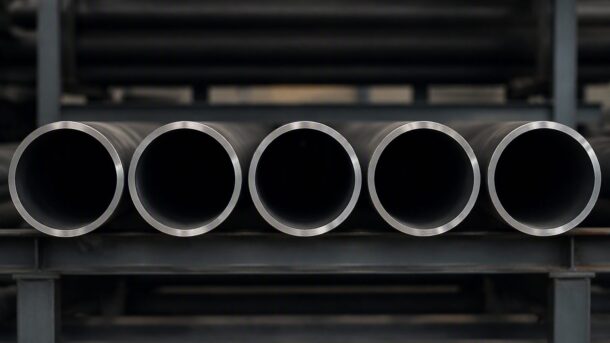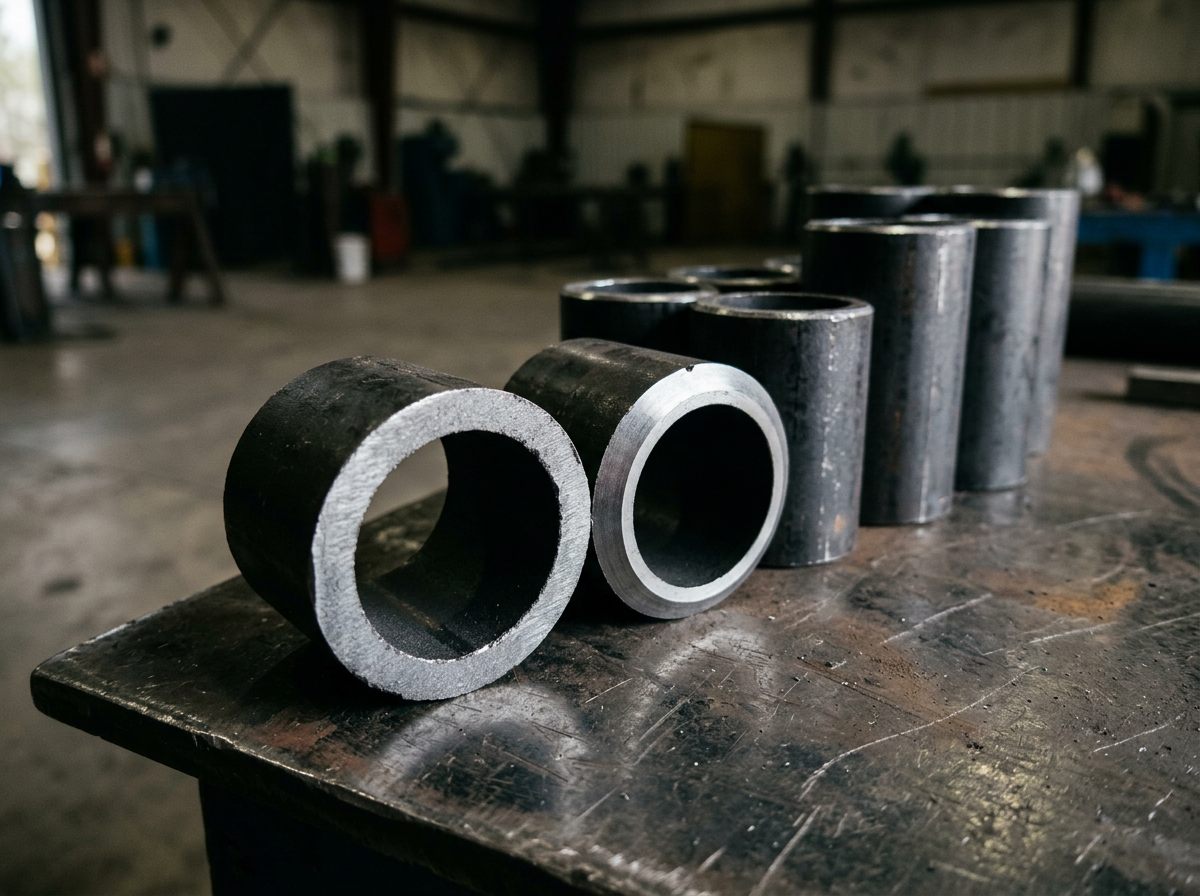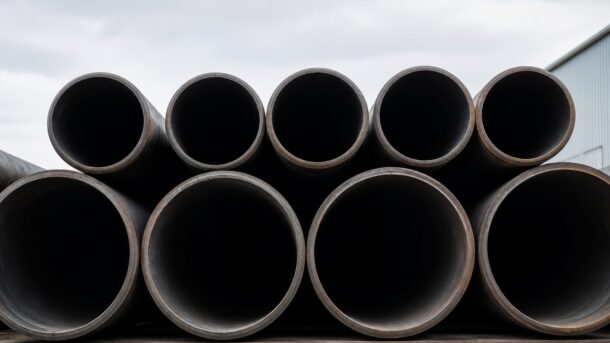
If you have ever opened a line pipe enquiry and seen “API 5L X52 PSL2” without a second thought, stop and check: the grade and the product specification level are the two lines on your purchase order that decide whether the pipe you receive is allowed anywhere near a pipeline. API 5L is the American Petroleum Institute’s specification for line pipe — the steel pipe used to transport oil, gas, and water under pressure — and it is harmonized with the international standard ISO 3183. The short answer to the question “what grade do I need” is never a number in isolation. It is a combination of grade (how strong the steel must be) and PSL (how tightly that strength, chemistry, and toughness are controlled). This guide breaks both down, from Grade B to X70, in the order a buyer should think about them.
Key facts at a glance
- API 5L line pipe is specified by two things together: a grade (B, X42, X52 … X70 and beyond) and a product specification level (PSL1 or PSL2).
- The number after the X is the minimum yield strength in thousands of pounds per square inch — X52 means a minimum yield strength of 52,000 psi (about 359 MPa).
- Grade B predates the X system and carries a minimum yield of about 35,000 psi (245 MPa).
- PSL2 is the stricter level: tighter chemistry, capped maximum strengths, carbon-equivalent limits, and mandatory impact testing where specified — the default for modern cross-country pipelines.
- Higher grades are not “better”; they allow thinner walls at the same pressure. That brings weldability, fracture-control, and cost consequences you must design for.
- The manufacturing route (ERW, seamless, or LSAW) is independent of grade — the same X52 grade can be made by any of the three routes if the mill is qualified.
What the grade number actually means
API 5L grades are shorthand for minimum yield strength. Take X52: the X signals “line pipe grade” and the 52 means the steel must deliver at least 52,000 psi (about 359 MPa) yield strength in the specified testing direction. The same logic runs through the whole family — X42, X46, X52, X56, X60, X65, X70 — each step up the ladder is roughly 5,000 to 7,000 psi of additional minimum yield. Grade B is the odd one out: it predates the X naming system and behaves like a 35,000 psi grade, which is why it appears on so many water and general-service orders.
The table below shows the minimum yield strength (YS) and minimum tensile strength (TS) for the grades you will actually see quoted, in megapascals with approximate psi. These are the API 5L minimums that mills certify against — the values on your mill test certificate must meet or exceed them.
| Grade | Min. yield (MPa / approx. psi) | Min. tensile (MPa / approx. psi) | Typical line-pipe duty |
|---|---|---|---|
| B | 245 / 35,000 | 415 / 60,000 | Water transmission, general low-pressure service |
| X42 | 290 / 42,000 | 415 / 60,000 | Water and gas distribution, gathering lines |
| X46 | 317 / 46,000 | 434 / 63,000 | Medium-pressure distribution |
| X52 | 359 / 52,000 | 455 / 66,000 | The transmission workhorse: gas, crude, product |
| X56 | 386 / 56,000 | 490 / 71,000 | Higher-pressure transmission |
| X60 | 414 / 60,000 | 520 / 75,000 | Long-distance gas and crude trunk lines |
| X65 | 448 / 65,000 | 535 / 78,000 | Offshore and onshore high-pressure lines |
| X70 | 485 / 70,000 | 570 / 83,000 | Large-diameter high-pressure gas transmission |
Grades above X70 (X80 and beyond) exist and are used on specialist long-distance projects, but they demand fracture-mechanics engineering, controlled rolling or heat treatment at the mill, and stricter welding control on site. For the overwhelming majority of commercial enquiries, Grade B through X70 is the full range you need to reason about.
PSL1 vs PSL2: the control level nobody should skip
Two pipes can both be stamped X52 and still be very different products, because API 5L divides every grade into two product specification levels. PSL1 is the base level — minimum strength, standard chemistry, routine testing. PSL2 layers on engineering controls that matter when a failure is not acceptable:
- Capped maximum strengths. PSL1 sets only minimums. PSL2 also sets maximum yield and tensile values, because pipe that is too strong for its design can be as dangerous as pipe that is too weak — over-matching steel complicates girth-weld qualification and can shift failure modes.
- Tighter chemistry. PSL2 imposes stricter limits on elements such as carbon, sulfur, and phosphorus, and adds maximum carbon-equivalent (CE) requirements that rise with grade. Lower carbon equivalent means the pipe welds more predictably on site.
- Impact toughness. Charpy V-notch testing of the base material — and for welded pipe, of the weld zone — is a standard expectation on PSL2 orders, giving you a number for fracture resistance at a defined test temperature instead of a hope.
- Traceability and documentation. PSL2 demands more rigorous inspection, marking, and certification trails. Your mill test certificate must state the PSL, and each heat’s chemistry and mechanical results are verifiable back to production records.
When do you need which? Distribution water lines and non-critical services frequently run PSL1. Cross-country transmission lines, high-pressure gas, offshore tie-ins, and anything crossing populated areas are specified PSL2 almost without exception — many national pipeline codes simply will not accept PSL1 for their mainline. Buyers also use PSL2 as a quality floor when they cannot visit the mill, because the tighter testing regime is a practical proxy for process control. And if your service is sour (hydrogen sulfide present), the specification does not stop at PSL: confirm with your engineer that the material also meets the sour-service requirements of ISO 15156 (NACE MR0175) before you order — grade alone does not protect you from sulfide stress cracking.
One caution from the field: some suppliers quote “API 5L X52” and let the PSL stay ambiguous until the paperwork arrives. Make the PSL a contract term, not a conversation. An X52 PSL1 pipe is not a substitute for X52 PSL2 unless your design and code allow it — the chemistry and toughness are different products, not a clerical detail.
Choosing a grade: work from pressure backward
The correct way to select a grade is to work backward from the design: the allowable pressure of a pipeline rises with wall thickness and with steel strength, so a higher grade mainly buys you a thinner wall — and therefore less steel, less welding, and lower transport cost — at the same operating pressure. That is why X70 dominates long-distance gas trunk lines where every millimeter of wall thickness multiplied by hundreds of kilometers is real money, and why Grade B still wins on short water mains where pressure is low and the cheapest adequate pipe is the right pipe.
Four questions settle most grade decisions:
- What is the design pressure and diameter? Run the wall-thickness calculation (Barlow’s equation is the familiar starting point: allowable pressure scales with strength and wall, and inversely with diameter). If the computed wall lands in a standard schedule with room to spare, you have your candidate grades.
- What does the governing code or project spec demand? Pipeline codes frequently set minimum grades, maximum allowable stresses, and fracture-toughness requirements per class location. Your spec is not a suggestion — it is the first filter.
- What is the fluid and environment? Sour gas, CO2, seawater exposure, and extreme service temperatures each pull you toward specific grades, PSL2, and supplementary requirements. Sweet, dry service is far more forgiving.
- Can your contractor weld it? Every grade jump changes welding procedure qualification, preheat, and inspection. An X70 line needs an X70-qualified crew; specifying X70 for a job that X52 handles cleanly is how projects acquire expensive field rework.
Once the grade and PSL are fixed, the manufacturing route is the next decision — and the two are independent. Your X52 or X70 can be produced as ERW, seamless, or LSAW depending on diameter, quantity, and route economics. If you have not yet worked through which of those routes fits your project, our earlier guide to ERW, seamless and LSAW pipe is the natural companion to this one: the grade sets the metallurgy while the route sets the geometry, the seam, and the inspection burden.
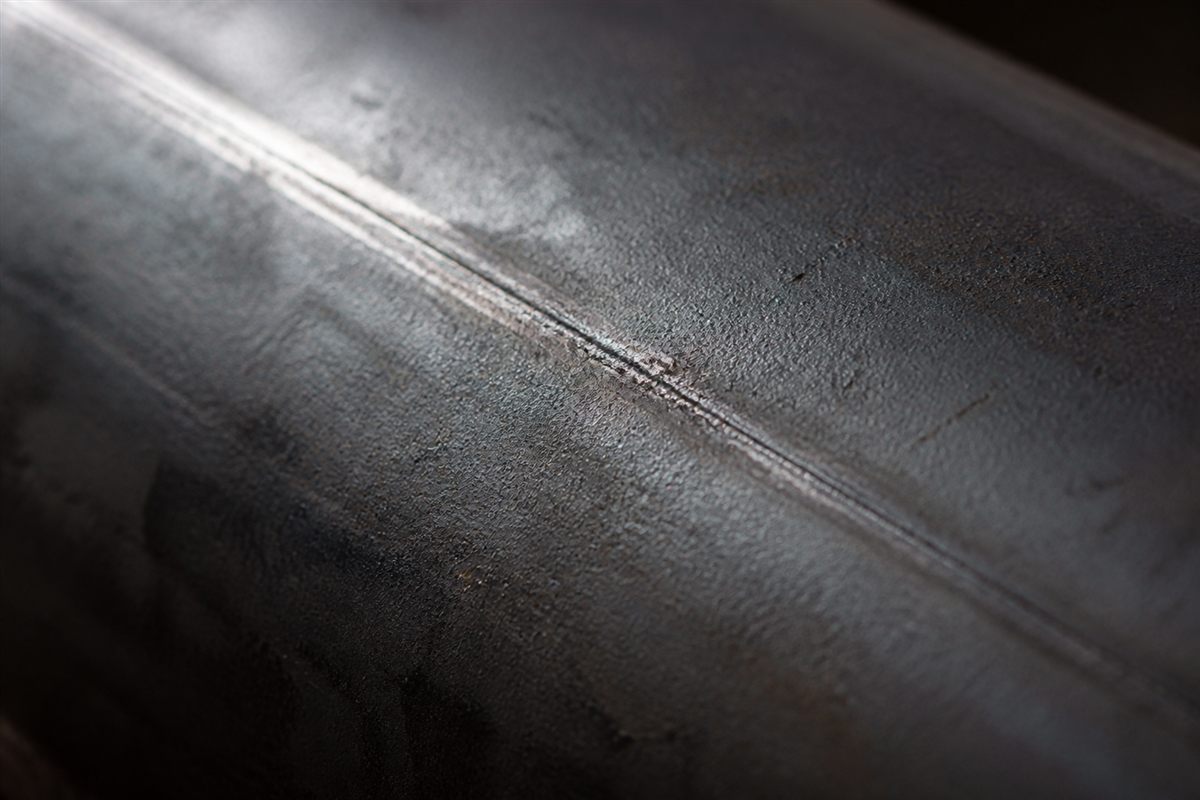
Wall thickness completes the picture: specify OD × WT × grade
A line pipe purchase order is not complete as “X52”. Mills quote and price by the full composition: outside diameter, wall thickness, grade, and PSL — for example 406.4 mm × 9.53 mm API 5L X52 PSL2, or the equivalent 16 in × 0.375 in. The wall thickness is where grade choice shows up financially. At a fixed design pressure, moving from X52 to X70 can allow a thinner wall that still passes the stress calculation, and because wall thickness drives tonnage — and tonnage drives price — the “expensive” grade sometimes wins on total landed cost once freight and installation are included.
Thinner walls are not free, though. They bring less stiffness for handling, tighter ovality tolerances through transport and storage, more care in field bending, and welding procedures with lower heat input. Remember also that design codes cap how much of the steel’s nominal yield a design may use — a design factor around 0.72 is common for onshore lines — so the certified minimum is never fully available to the calculation. Finally, the ordered wall should make room for corrosion allowance and for any end preparation or threading your connections need. When a supplier asks you to confirm “only the grade”, treat that as a warning flag: the wall and the grade are bought together, and an enquiry that names one without the other is an unfinished specification.
The paperwork that closes the deal
API 5L pipe is bought on documents as much as on steel. Before payment, your supplier should provide a mill test certificate to EN 10204 3.1 that states, at minimum: the standard and grade (for example API 5L X52 PSL2), the heat number, full chemical analysis, yield and tensile values, and the results of the required tests — hydrostatic testing on every length, and for PSL2, the Charpy impact results at the specified temperature. Cross-check the certificate against the stenciling on the pipe itself; they should match heat for heat. If a supplier cannot produce this paperwork before you pay, the price is not low enough to make up for it. This discipline matters even more on Gulf and Middle East projects, where contractor vendor-approval systems will reject a shipment whose certificates do not trace back to an approved mill.
FAQ
What does the X in X52 mean? It marks an API 5L line pipe grade; the number is the minimum yield strength in thousands of psi. X52 = 52,000 psi minimum yield (about 359 MPa).
Is Grade B an X-grade? No. Grade B predates the X system and is treated as a separate grade with roughly 35,000 psi minimum yield. It is common on water and general-service lines where higher strength buys nothing.
What is the difference between X42 and X70 in practice? About 40,000 psi of minimum yield — which in practice means X70 lines can run at higher pressure with thinner walls, but demand more demanding welding control and higher material cost. Choose the lowest grade the design allows.
PSL1 or PSL2 — which should I buy? Follow your code and design. If the project does not specify, PSL2 is the safer commercial default for pressure service because of its capped strengths, chemistry limits, and impact testing; PSL1 remains legitimate for low-risk distribution duty.
Can X52 PSL1 be substituted for X52 PSL2? Only if your engineering review and code accept it. The PSL is part of the product definition, and PSL2’s maximum-strength and toughness requirements exist for a reason.
Do higher grades weld differently? Yes. Higher grades need qualified procedures, controlled heat input, and often preheat — which is why matching the grade to the contractor’s capability is part of the buying decision, not an afterthought.
How should I phrase a line pipe enquiry so suppliers price it correctly? Give the full product definition: outside diameter and wall thickness, grade and PSL (for example API 5L X52 PSL2), standard edition, length, end finish (plain or beveled), coating, quantity, and destination port. A vague enquiry invites substitution risk at the quoting stage, where it is hardest to detect.
Can a high grade like X70 be used for a water pipeline? Technically yes, but it is rarely economical. Water mains typically run Grade B to X42, where pressure and diameter are modest; specifying X70 for a water line pays for strength the design never uses and complicates welding for no benefit. Match the grade to the duty, not to fashion.
Bottom line
- Specify grade and PSL together, in writing: “API 5L X52 PSL2” is one product; “X52” alone is an argument waiting to happen.
- Work backward from pressure, diameter, and code: the lowest grade that passes the design is the commercially correct grade.
- Remember that grade and manufacturing route are independent variables — decide both, deliberately.
- Treat the mill test certificate as part of the pipe: EN 10204 3.1 documentation, hydrostatic results, and PSL2 impact data must match the stenciling before money moves.
- On sour or critical service, grade is necessary but not sufficient — confirm ISO 15156 (NACE MR0175) compliance and the project’s supplementary requirements with your engineer.
If you are building a line-pipe specification from scratch, start with our Steel Pipe Guide series, where the grades above meet schedules, tolerances, and the checks you should run at the port.