Steel Pipe Guide

Hot-Dip Galvanized Steel Pipe: What an ISO 1461 Coating Really Guarantees

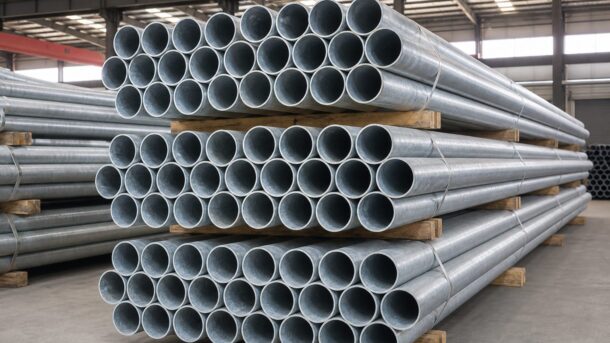
Neat stacks of hot-dip galvanized steel pipes displaying spangle zinc coatings in an industrial logistics facility

In harsh industrial environments, municipal infrastructure, and coastal construction projects, atmospheric corrosion is the single largest contributor to premature steel pipe failure. While liquid paint coatings and epoxy wraps provide baseline surface barriers, they remain highly vulnerable to handling abrasions, pinholes (holidays), and ultraviolet degradation over time.

For permanent corrosion defense, Hot-Dip Galvanizing (HDG) governed by ISO 1461 (Hot dip galvanized coatings on fabricated iron and steel articles — Specifications and test methods) remains the gold standard in international piping engineering. Unlike mechanical paint films, hot-dip galvanizing forms a series of metallurgically bonded zinc-iron alloy layers that physically fuse with the carbon steel substrate.

Yet procurement teams and field engineers frequently misunderstand what an ISO 1461 specification actually guarantees—and what it does not. Confusing post-fabrication hot-dip batch galvanizing with continuous in-line pre-galvanizing, misinterpreting minimum local versus average coating thickness rules, or overlooking the Sandelin reactivity effect in steel chemistry can lead to rejected shipments, costly project delays, and premature rust in marine service.

This comprehensive technical guide delivers an authoritative engineering analysis of ISO 1461 hot-dip galvanized steel pipe, examining metallurgical alloy formation, coating thickness standards, ASTM A53 comparison, international durability classifications (ISO 9223), and rigorous on-site quality control verification.

Key facts at a glance

  • Metallurgical bond vs. surface adhesion: Hot-dip galvanizing is not a painted coating. Immersing thoroughly cleaned steel in a bath of molten zinc at 450°C (842°F) creates four distinct metallurgical intermetallic layers (Eta, Zeta, Delta, Gamma) that achieve bond strengths exceeding 25 MPa (3,600 psi), making delamination virtually impossible during transport.
  • ISO 1461 coating thickness standards: For steel pipes with wall thickness > 6.0 mm, ISO 1461 mandates a minimum average coating thickness of 85 µm (610 g/m²) and a local minimum of 70 µm. For wall thickness between 3.0 mm and 6.0 mm, the minimum average is 70 µm (505 g/m²).
  • Self-healing cathodic protection: Zinc provides sacrificial galvanic protection. If the galvanized pipe surface is gouged or cut on site up to a width of 2.0 mm, the surrounding zinc sacrifices itself electrochemically, forming protective zinc hydroxycarbonate salts across the exposed bare steel.
  • Batch HDG vs. Pre-Galvanized (Continuous): Batch hot-dip galvanizing per ISO 1461 coats both the internal bore and external surface simultaneously after the pipe is fully formed and welded. Pre-galvanized pipe (made from mill-galvanized strip) carries a much thinner coating (15–25 µm) and requires post-weld seam metallizing.
  • Silicon and phosphorus control (Sandelin Curve): Carbon steel chemistry governs the zinc reaction. Silicon levels between 0.03% and 0.14% or above 0.25% trigger hyper-reactive zinc growth, producing thick, dark grey, brittle coatings prone to flaking if not managed during steel melting.

The metallurgy of hot-dip galvanizing: how zinc fuses to steel

The defining characteristic of hot-dip galvanizing is the diffusion reaction between molten zinc and iron. When carbon steel pipe is submerged in molten zinc, zinc atoms diffuse into the crystal lattice of the steel, forming four distinct phase layers:

  1. Gamma (Γ) Layer: A microscopic base layer (approx. 1 µm) directly adhering to the steel substrate, consisting of an intermetallic alloy with 21% to 28% iron (Fe₃Zn₁₀).
  2. Delta (δ) Layer: A dense, columnar crystalline layer consisting of 7% to 11.5% iron (FeZn₇). This layer is exceptionally hard—measuring roughly 244 DPH (Diamond Pyramid Hardness), which is significantly harder than the underlying base steel (159 DPH).
  3. Zeta (ζ) Layer: A feathery crystal matrix containing 5.8% to 6.7% iron (FeZn₁₃). Measuring approximately 179 DPH, it absorbs severe mechanical abrasion during crane rigging, pipe threading, and pipe rack installation.
  4. Eta (η) Layer: The outer surface layer of virtually pure zinc (99.9% Zn, 0.03% Fe). It is soft and ductile (70 DPH), providing high impact absorption and the characteristic crystalline zinc spangle appearance.

Because the inner intermetallic Delta and Zeta layers are harder than standard carbon steel, hot-dip galvanized pipe exhibits extraordinary resistance to gouging during overland trucking and ocean shipping.

As detailed in our analysis of Schedule 40 vs Schedule 80 steel pipe wall thickness, pipe schedule directly governs the thermal mass and immersion time required in the galvanizing kettle.

ISO 1461 coating thickness and mass specifications

ISO 1461 categorizes minimum acceptable coating thicknesses according to the steel section thickness (pipe wall thickness). Unlike proprietary marketing claims, ISO 1461 sets clear, legally binding pass/fail thresholds for export contracts:

Steel Pipe Wall Thickness (t) ISO 1461 Local Minimum Coating Thickness ISO 1461 Average Minimum Coating Thickness Equivalent Local Coating Mass Equivalent Average Coating Mass Typical Industrial Service Life (C3 Environment)
t ≥ 6.0 mm (e.g., Sch 40 ≥ 4″, Sch 80 ≥ 2.5″) 70 µm 85 µm 500 g/m² 610 g/m² 50+ years
3.0 mm ≤ t < 6.0 mm (e.g., 1-1/2″ to 3″ Sch 40) 55 µm 70 µm 395 g/m² 505 g/m² 35 to 50 years
1.5 mm ≤ t < 3.0 mm (e.g., Light-wall conduit, 1/2″ Sch 40) 45 µm 55 µm 325 g/m² 395 g/m² 25 to 35 years
t < 1.5 mm (Thin gauge tubing) 35 µm 45 µm 250 g/m² 325 g/m² 15 to 25 years

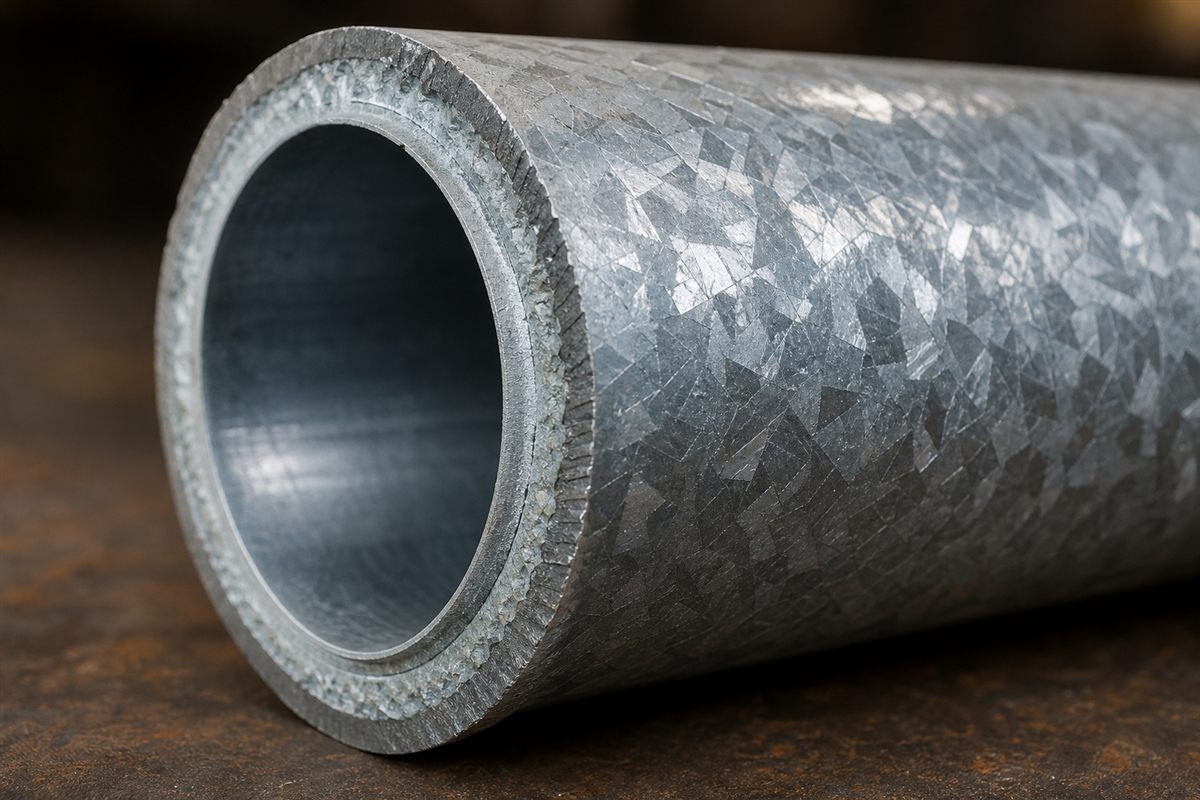
Macro cross section of hot-dip galvanized steel pipe showing zinc alloy coating layer and clean beveled end

Measurement rules under ISO 1461

  • Reference Area: A reference area is a defined surface area (typically 100 cm²) on which magnetic gauge readings are taken.
  • Local Coating Thickness: The arithmetic mean of at least 5 magnetic gauge spot readings taken within a single reference area.
  • Average Coating Thickness: The mean of all reference area averages taken across the entire inspection lot.
  • A single spot reading below the local minimum does not constitute a failure if the local reference area average satisfies the table. However, any reading below 80% of the local minimum represents an automatic reject.

Comparing ISO 1461 with ASTM A53 and ASTM A123

In global steel pipe procurement, specifications frequently reference American ASTM standards alongside ISO norms:

Standard Scope & Application Specified Minimum Zinc Coating Internal Bore Requirement
ISO 1461 General hot-dip galvanizing for fabricated steel articles, structural steel, and loose pipe batches. ≥ 70–85 µm (based on wall thickness). Mass: ≥ 505–610 g/m². Mandates complete internal and external coverage for hollow sections.
ASTM A53 / A53M Standard specification for pipe, steel, black and hot-dipped, zinc-coated, welded and seamless. ≥ 1.8 oz/ft² (550 g/m², approx. 77 µm) average; ≥ 1.6 oz/ft² (490 g/m², approx. 69 µm) individual specimen. Standard applies specifically to piping for fluid, steam, and gas conveyance.
ASTM A123 / A123M Hot-dip galvanizing on iron and steel products (structural shapes, assemblies, and custom piping). Grade 75 to Grade 100 (75–100 µm) for structural pipe thicknesses ≥ 4.8 mm. Mandates thorough venting and drainage for hollow structural sections.

In practice, high-quality carbon steel pipe manufactured to ASTM A53 Grade B Hot-Dipped Galvanized standard inherently complies with or exceeds ISO 1461 coating requirements for medium-wall pipe.

The Sandelin Effect: how steel chemistry dictates coating quality

A critical factor in galvanizing quality is the chemical composition of the substrate steel. Silicon (Si) and Phosphorus (P) act as catalysts, dramatically accelerating the reaction between iron and molten zinc:

1. The Sandelin Reactivity Zone

In carbon steel metallurgy, steel reactivity follows the famous Sandelin Curve:

  • Low-reactivity steel (Si < 0.03% and P < 0.02%): Produces a standard, shiny silver zinc coating with normal intermetallic growth and an outer ductile Eta layer.
  • Sandelin range (0.03% ≤ Si ≤ 0.14%): The reaction is hyper-accelerated. The brittle Zeta (ζ) layer grows uncontrollably to the outer surface, consuming the pure zinc Eta layer. The resulting coating is dull matte grey, rough, excessively thick (> 150 µm), and highly prone to flaking under mechanical impact.
  • Sebisty / Modified range (0.15% ≤ Si ≤ 0.25%): Zinc growth stabilizes, producing a uniform, adherent coating with moderate spangle.
  • High-silicon hyper-reactive steel (Si > 0.25%): Reaction rates accelerate again, producing ultra-thick, dark grey coatings.

Procurement takeaway: When ordering steel pipe destined for post-galvanizing or when sourcing pre-galvanized raw material, ensure the mill test certificate reflects aluminum-killed steel with silicon content controlled either below 0.03% or tightly held in the 0.15% to 0.22% window.

Atmospheric corrosion durability: ISO 9223 classifications

The operational life of hot-dip galvanized steel pipe depends directly on environmental corrosivity categories codified in ISO 9223 / ISO 12944-2:

Corrosivity Category Environment Description Annual Zinc Loss Rate Expected Service Life (85 µm Coating) Typical Application Examples
C1 (Very Low) Heated clean indoor spaces, dry offices, climate-controlled warehouses. < 0.1 µm/year > 100 years Indoor architectural framing, building water risers.
C2 (Low) Unheated rural buildings, low-pollution atmospheric regions. 0.1 to 0.7 µm/year > 80 years Rural utility piping, agricultural structural posts.
C3 (Medium) Urban and industrial atmospheres, moderate sulfur dioxide, inland commercial zones. 0.7 to 2.1 µm/year 40 to 60 years Commercial HVAC cooling water lines, warehouse pipe racks.
C4 (High) Coastal regions with moderate salinity, heavy industrial chemical complexes. 2.1 to 4.2 µm/year 20 to 40 years Chemical plant utilities, coastal municipal water lines.
C5 (Very High Marine) High-salinity shoreline exposure, splash zones, harsh offshore gas terminals. 4.2 to 8.4 µm/year 10 to 20 years Middle East Gulf port piping, marine jetty structures.
CX (Extreme) Sub-tropical offshore, severe industrial acid-chloride mist. > 8.4 µm/year 5 to 10 years (Requires duplex paint topcoat) Desalination intake pipe bridges, offshore drill rigs.

As shown, in typical C3 urban environments, an 85 µm ISO 1461 coating delivers half a century of zero-maintenance corrosion protection without requiring any secondary painting.

Fabrication and joining: welding, threading, and cutting HDG pipe

Working with hot-dip galvanized pipe on active job sites requires strict adherence to fabrication procedures to prevent zinc embrittlement and preserve coating integrity:

1. Welding galvanized steel pipe

  • Zinc fuming hazard: Welding galvanized steel vaporizes zinc at 906°C (1,663°F), producing dense white zinc oxide fumes that cause acute metal fume fever. Welders must utilize local exhaust extraction or powered air-purifying respirators (PAPR).
  • Weld pool contamination: Direct welding over heavy zinc can cause zinc penetration into the molten steel grain boundaries, inducing intergranular liquid metal embrittlement and micro-cracking.
  • Best practice: Mechanically grind back the zinc coating at least 25 mm (1.0 inch) from the weld bevel preparation prior to butt-welding.

2. Post-weld repair per ISO 1461 / ISO 12944

Cut ends, welded joints, and accidental handling abrasions must be restored using approved repair compounds:

  • Low-melting zinc alloy rods (zinc sticks): Heated over the preheated joint (300°C) to deposit molten zinc.
  • Zinc-rich cold galvanizing paint: Must contain at least 80% to 90% metallic zinc dust by weight in the dry film.
  • Repair thickness rule: ISO 1461 mandates that the repaired area coating thickness must be at least 30 µm thicker than the original local requirement (e.g., minimum 100 µm repair over a 70 µm requirement).

As demonstrated in our guide on ERW vs Seamless vs LSAW steel pipes, pipe threads must be sealed with anaerobic pipe sealants or PTFE tape to protect exposed thread roots.

6-Step Receipt Quality Inspection Checklist

When offloading galvanized steel pipe shipments at port terminals or staging yards, QA/QC inspectors should execute these six verification steps:

  1. Verify Mill Test Certificate (MTC): Confirm EN 10204 Type 3.1 certification stating compliance with ISO 1461 / ASTM A53, validating base steel heat numbers, yield strength, and silicon/phosphorus cast analysis.
  2. Magnetic coating thickness measurement: Calibrate an electromagnetic thickness gauge (Elcometer) per ISO 2178 on smooth calibration shims. Take 5 readings per reference area across 10 random pipes per bundle. Verify readings meet or exceed the 70–85 µm threshold.
  3. Preece Test (Copper Sulfate Dip) for uniformity: For specialized water line verification, perform the ASTM A239 Preece test—submerging pipe specimens in saturated copper sulfate solution for four 1-minute dips to verify uniform zinc thickness without premature copper plate-out.
  4. Visual surface inspection: Check for excessive zinc dross spikes, severe pimpling, flux inclusions, or ungalvanized bare spots. Minor surface roughness and color variations (shiny spangle to matte grey) are commercially acceptable under ISO 1461 and do not affect corrosion resistance.
  5. Wet Storage Stain (White Rust) inspection: Inspect bundles for heavy white/grey zinc hydroxide deposits caused by trapped moisture between tightly nested pipes. Light white rust is superficial and converts to protective zinc carbonate upon outdoor air exposure; heavy dark crusting requires removal and magnetic thickness re-verification.
  6. Internal bore inspection: Ensure the internal pipe bore is completely clear of zinc runs, web clogs, or frozen zinc plugs that would obstruct fluid flow or damage downstream valves.

FAQ

Does hot-dip galvanizing weaken carbon steel pipe?
No. Standard structural and pressure carbon steels (such as ASTM A53 Grade B, A106, and API 5L Grade B) undergo no loss of tensile or yield strength during galvanizing. The kettle temperature (450°C) is well below the lower critical transformation temperature of steel (723°C), acting essentially as a mild thermal stress relief.

Why are some galvanized pipes shiny while others are matte grey?
Visual sheen depends entirely on steel silicon content and cooling rates, not quality. Shiny pipes have an outer pure zinc (Eta) layer, while matte grey pipes have a higher-silicon substrate that allowed the iron-zinc alloy (Zeta) layer to reach the outer surface. Both provide equivalent—and often superior—corrosion protection.

What is the difference between Hot-Dip Galvanizing (HDG) and Electro-Galvanizing?
Electro-galvanizing deposits a micro-thin layer of zinc (5 to 12 µm) via electroplating. It provides zero metallurgical alloy bonding and fails rapidly in outdoor environments. Hot-dip galvanizing deposits 70 to 100+ µm of metallurgically bonded zinc-iron alloy for decades of outdoor service.

How is internal bore galvanizing ensured on long pipe lengths?
Pipes are submerged in the molten zinc bath at an incline (typically 30° to 45°), allowing molten zinc to flood through the entire bore. High-pressure steam or air blow-out nozzles are used immediately upon withdrawal to clear excess zinc from the internal diameter.

Can galvanized pipe be used for underground burial?
Yes, but service life depends heavily on soil resistivity, moisture, and pH. In well-drained, sandy soils with pH > 6.0, HDG pipe lasts 30 to 50 years. In heavy acidic clay soils (pH < 5.0) or high-chloride coastal soils, sacrificial zinc degrades rapidly, requiring supplementary cathodic protection or extruded polyethylene (3LPE) coatings.

What causes “White Rust” and how is it prevented during ocean transit?
White rust (zinc hydroxide) occurs when freshly galvanized pipes are stacked tightly in humid, stagnant shipping containers or cargo holds without air circulation. Mills prevent white rust by applying an automated post-galvanizing chromate passivating dip or water-based polymer seal coat prior to export container stuffing.

Can hot-dip galvanized steel pipe be used for drinking water?
Yes, provided the zinc bath complies with purity standards (lead Pb ≤ 0.005% per NSF/ANSI 61 and EN 10240 Quality A1). Galvanized steel water mains have operated reliably worldwide for over a century.

What is the maximum operating temperature for galvanized pipe?
Hot-dip galvanized pipe operates continuously up to 200°C (392°F) without coating degradation. Above 200°C, differential thermal expansion between the zinc alloy layers can induce micro-cracking and eventual spalling.

Bottom line

  • Specify ISO 1461 as your governing standard for heavy-duty, long-life corrosion protection in commercial HVAC, coastal construction, industrial support framing, and municipal infrastructure.
  • Ensure project specifications require ≥ 85 µm average coating thickness for steel wall thicknesses > 6.0 mm and ≥ 70 µm for walls between 3.0 mm and 6.0 mm.
  • Enforce strict control over steel substrate chemistry—specifying silicon levels outside the reactive Sandelin range (0.03%–0.14%) to prevent brittle, hyper-reactive coating growth.
  • Require mill test certificates to certify EN 10204 Type 3.1 traceability and enforce electromagnetic thickness gauge verification across all delivered export bundles.

For more technical breakdowns of carbon steel specifications, pipe manufacturing methods, and mill quality verification, explore our full library of guides in the Steel Pipe Guide archive.
Schedule 40 vs Schedule 80 Steel Pipe: Wall Thickness, Pressure, and Cost Guide

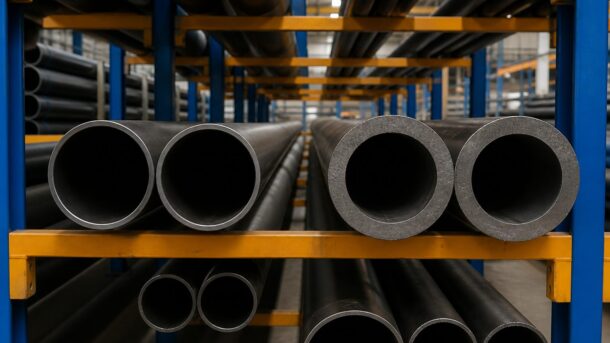
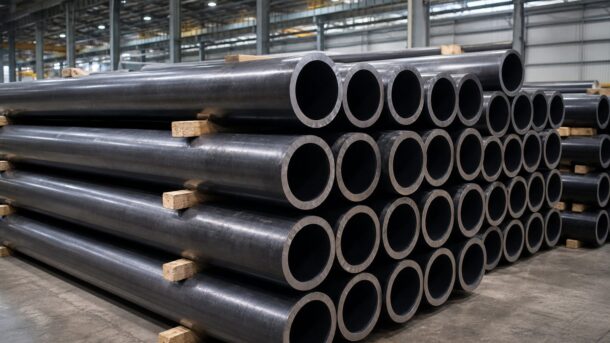
Black carbon steel pipes in warehouse racks comparing Schedule 40 and Schedule 80 wall thicknesses

In industrial piping systems, specifying pipe wall thickness is a direct balancing act between structural safety and material economics. Among the standardized pipe schedules established by the American National Standards Institute (ANSI) and the American Society of Mechanical Engineers (ASME), Schedule 40 (Sch 40) and Schedule 80 (Sch 80) represent the vast majority of global carbon steel procurement.

Yet treating pipe schedule as a simple “standard versus heavy-duty” option frequently leads to costly over-specification or dangerous operational hazards. Selecting Schedule 80 when Schedule 40 meets design criteria inflates raw material costs by 25% to 45% and adds substantial freight tonnage to export shipments. Conversely, relying on Schedule 40 in high-pressure steam headers or threaded hydrocarbon lines can lead to catastrophic wall thinning and code violations under ASME B31 pressure piping rules.

This technical guide delivers an exhaustive engineering breakdown of Schedule 40 versus Schedule 80 carbon steel pipe, analyzing ASME B36.10M dimensional standards, internal flow dynamics, allowable operating pressures, structural bending capacities, and international procurement economics.

Key facts at a glance

  • Constant Outside Diameter (OD): For any given Nominal Pipe Size (NPS), the outside diameter remains completely identical between Schedule 40 and Schedule 80. The extra steel in Schedule 80 is added entirely to the inside, increasing wall thickness while reducing the internal diameter (ID) and flow cross-section.
  • Wall thickness differential: Schedule 80 pipe is approximately 25% to 45% thicker than Schedule 40 depending on diameter, significantly increasing internal bursting strength and structural stiffness.
  • Weight and procurement cost: Because carbon steel pipe is priced and transported primarily on a per-ton basis, Schedule 80 pipe carries a 25% to 45% higher weight per meter (or foot), directly driving up purchase price, container payload limits, and structural support requirements.
  • Pressure performance: Schedule 80 delivers roughly 30% to 50% higher internal working pressure capacity calculated via Barlow’s Formula, making it the default choice for high-pressure hydraulic, chemical process, and steam lines.
  • Threading implications: Threading cuts into the outer wall of a pipe by up to 50% of the wall thickness on smaller nominal sizes. While Schedule 80 retains substantial structural wall below the root of the thread, threading Schedule 40 requires strict pressure derating under ASME B31 codes.

What does “Schedule” mean in steel pipe?

The term “Schedule” (abbreviated as Sch.) originates from the standardization work codified in ASME/ANSI B36.10M (Welded and Seamless Wrought Steel Pipe). Prior to schedule numbers, the piping industry relied on three traditional wall thickness designations:

  1. Standard Weight (STD)
  2. Extra Strong (XS) or Extra Heavy (XH)
  3. Double Extra Strong (XXS) or Double Extra Heavy (XXH)

To accommodate expanding chemical processing and high-pressure steam demands, ASME introduced numeric schedule numbers ranging from Schedule 5 through Schedule 160.

In modern commercial practice:

  • For pipe sizes from NPS 1/8 through NPS 10, Schedule 40 is identical to Standard Weight (STD).
  • For pipe sizes from NPS 1/8 through NPS 8, Schedule 80 is identical to Extra Strong (XS).
  • At larger diameters (NPS 12 and above), STD and XS diverge from Schedule 40 and Schedule 80, making exact schedule specification critical.

As detailed in our foundational guide on ASTM A53 vs A106 carbon steel pipe, schedule designations apply equally to both seamless and welded (ERW) manufacturing routes.

Dimensional and weight comparison table: NPS 1/2″ to 24″

The following technical reference table compiles ASME B36.10M dimensions, comparing nominal size, outside diameter, wall thickness, inside diameter, and theoretical plain-end weight for Schedule 40 versus Schedule 80 carbon steel pipe:

Nominal Pipe Size (NPS) Outside Diameter (OD) Schedule 40 Wall Thickness Schedule 40 Inside Diameter (ID) Schedule 40 Weight (kg/m / lb/ft) Schedule 80 Wall Thickness Schedule 80 Inside Diameter (ID) Schedule 80 Weight (kg/m / lb/ft) Weight Increase (Sch 80 vs 40)
1/2″ (DN 15) 21.3 mm (0.840 in) 2.77 mm (0.109 in) 15.80 mm (0.622 in) 1.27 kg/m (0.85 lb/ft) 3.73 mm (0.147 in) 13.88 mm (0.546 in) 1.62 kg/m (1.09 lb/ft) +27.6%
3/4″ (DN 20) 26.7 mm (1.050 in) 2.87 mm (0.113 in) 20.93 mm (0.824 in) 1.69 kg/m (1.13 lb/ft) 3.91 mm (0.154 in) 18.85 mm (0.742 in) 2.20 kg/m (1.48 lb/ft) +30.2%
1″ (DN 25) 33.4 mm (1.315 in) 3.38 mm (0.133 in) 26.64 mm (1.049 in) 2.50 kg/m (1.68 lb/ft) 4.55 mm (0.179 in) 24.30 mm (0.957 in) 3.24 kg/m (2.17 lb/ft) +29.6%
1-1/2″ (DN 40) 48.3 mm (1.900 in) 3.68 mm (0.145 in) 40.89 mm (1.610 in) 4.05 kg/m (2.72 lb/ft) 5.08 mm (0.200 in) 38.10 mm (1.500 in) 5.41 kg/m (3.63 lb/ft) +33.6%
2″ (DN 50) 60.3 mm (2.375 in) 3.91 mm (0.154 in) 52.51 mm (2.067 in) 5.44 kg/m (3.66 lb/ft) 5.54 mm (0.218 in) 49.25 mm (1.939 in) 7.48 kg/m (5.03 lb/ft) +37.5%
3″ (DN 80) 88.9 mm (3.500 in) 5.49 mm (0.216 in) 77.92 mm (3.068 in) 11.29 kg/m (7.58 lb/ft) 7.62 mm (0.300 in) 73.66 mm (2.900 in) 15.27 kg/m (10.26 lb/ft) +35.3%
4″ (DN 100) 114.3 mm (4.500 in) 6.02 mm (0.237 in) 102.26 mm (4.026 in) 16.07 kg/m (10.80 lb/ft) 8.56 mm (0.337 in) 97.18 mm (3.826 in) 22.32 kg/m (15.00 lb/ft) +38.9%
6″ (DN 150) 168.3 mm (6.625 in) 7.11 mm (0.280 in) 154.08 mm (6.065 in) 28.26 kg/m (18.99 lb/ft) 10.97 mm (0.432 in) 146.36 mm (5.761 in) 42.56 kg/m (28.60 lb/ft) +50.6%
8″ (DN 200) 219.1 mm (8.625 in) 8.18 mm (0.322 in) 202.72 mm (7.981 in) 42.55 kg/m (28.58 lb/ft) 12.70 mm (0.500 in) 193.68 mm (7.625 in) 64.64 kg/m (43.43 lb/ft) +51.9%
10″ (DN 250) 273.0 mm (10.750 in) 9.27 mm (0.365 in) 254.51 mm (10.020 in) 60.31 kg/m (40.52 lb/ft) 15.09 mm (0.594 in) 242.87 mm (9.562 in) 95.97 kg/m (64.48 lb/ft) +59.1%
12″ (DN 300) 323.8 mm (12.750 in) 10.31 mm (0.406 in) 303.22 mm (11.938 in) 79.73 kg/m (53.57 lb/ft) 17.48 mm (0.688 in) 288.90 mm (11.374 in) 132.08 kg/m (88.63 lb/ft) +65.7%
16″ (DN 400) 406.4 mm (16.000 in) 12.70 mm (0.500 in) 381.00 mm (15.000 in) 123.30 kg/m (82.85 lb/ft) 21.44 mm (0.844 in) 363.52 mm (14.312 in) 203.53 kg/m (136.68 lb/ft) +65.1%
20″ (DN 500) 508.0 mm (20.000 in) 15.09 mm (0.594 in) 477.82 mm (18.812 in) 183.42 kg/m (123.23 lb/ft) 26.19 mm (1.031 in) 455.62 mm (17.938 in) 311.18 kg/m (208.97 lb/ft) +69.7%
24″ (DN 600) 610.0 mm (24.000 in) 17.48 mm (0.688 in) 575.04 mm (22.624 in) 255.41 kg/m (171.29 lb/ft) 30.96 mm (1.219 in) 548.08 mm (21.562 in) 441.85 kg/m (296.22 lb/ft) +73.0%

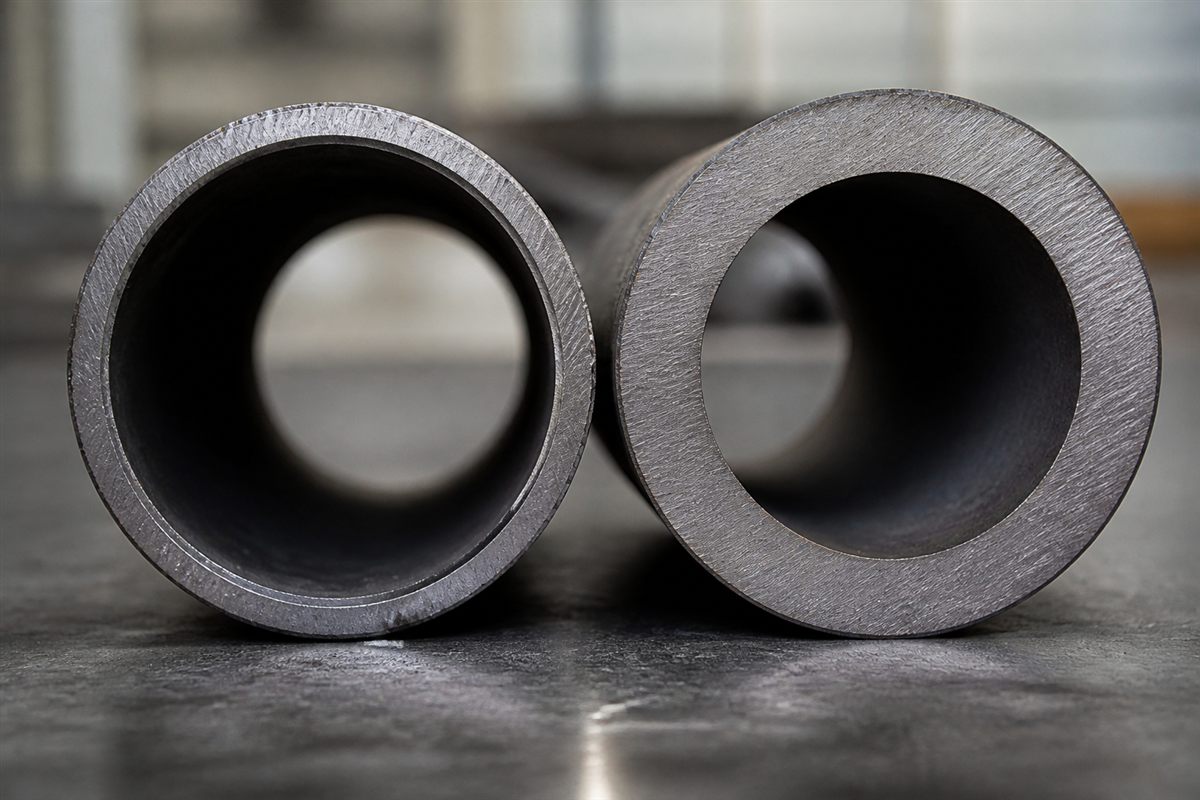
Macro cross section view contrasting Schedule 40 and Schedule 80 steel pipe walls and beveled ends

Pressure calculation: Barlow’s formula in action

To understand how schedule thickness translates into pressure capacity, engineers apply Barlow’s Formula, which establishes the mathematical relationship between internal fluid pressure, pipe diameter, wall thickness, and material yield strength:

P = (2 · S · t) / D

Where:

  • P = Internal design bursting pressure (psi or bar)
  • S = Specified Minimum Yield Strength of the steel grade (psi or MPa)
  • t = Nominal wall thickness minus manufacturing tolerances and corrosion allowance (in or mm)
  • D = Outside diameter (in or mm)

Practical pressure comparison: 4-inch ASTM A106 Grade B Pipe

Let us calculate the internal bursting pressure of a 4-inch (114.3 mm OD) ASTM A106 Grade B pipe (S = 35,000 psi yield strength):

  • Schedule 40 (t = 0.237 in): P = (2 · 35,000 · 0.237) / 4.500 = 3,686 psi (254 bar)
  • Schedule 80 (t = 0.337 in): P = (2 · 35,000 · 0.337) / 4.500 = 5,242 psi (361 bar)

In this scenario, stepping from Schedule 40 to Schedule 80 increases the theoretical pressure capacity by 42.2%. For severe operating environments—such as high-pressure steam headers or sour hydrocarbon gas lines under our API 5L line pipe guidelines—that additional 1,556 psi margin provides essential containment safety against pressure spikes and internal corrosion over decades of service.

Flow rate and hydraulic resistance

A critical trade-off frequently overlooked in structural piping is internal cross-sectional area. Because the outside diameter is locked by standard fitting dimensions, increasing wall thickness directly constricts the inner bore:

  • On a 2-inch pipe, Schedule 80 reduces internal cross-sectional flow area by 12.1% compared to Schedule 40.
  • On a 4-inch pipe, Schedule 80 reduces internal flow area by 9.7%.
  • On a 6-inch pipe, Schedule 80 reduces internal flow area by 10.2%.

Procurement takeaway: Specifying Schedule 80 on long-distance cooling water loops or low-pressure transfer lines not only wastes steel tonnage but also permanently increases lifetime pumping energy costs due to higher line friction.

Structural and mechanical differences: bending, span, and threading

Beyond internal pressure, wall thickness governs the pipe’s performance as a structural member or exposed conduit:

1. Bending moment of inertia and pipe span

The structural stiffness of a pipe depends on its second moment of area (I). Schedule 80 pipe features a significantly higher moment of inertia and section modulus (Z), allowing for longer unsupported spans between pipe racks without exceeding allowable mid-span deflection limits.

2. Threading and mechanical joining

When pipes are joined using American National Standard Taper Pipe Threads (NPT), the threading die cuts deep grooves into the pipe wall.

On a 1-inch Schedule 40 pipe with a wall thickness of 3.38 mm (0.133 in), the NPT thread root depth removes roughly 1.4 mm (0.055 in) of steel, leaving less than 60% of the original wall under the thread root.

For threaded high-pressure lines, ASME B31.1 and B31.3 codes mandate Schedule 80 as the minimum wall thickness to ensure sufficient sound metal remains beneath the thread root to resist mechanical fatigue.

Procurement, logistics, and cost analysis

Steel pipe is manufactured, transported, and priced on international commodity markets based on weight (metric tons) rather than linear length. Understanding how schedule dictates tonnage is essential for project estimators and commercial buyers.

1. Raw material purchase price

At equivalent base prices per metric ton:

  • A 1,000-meter run of 6-inch Schedule 40 pipe weighs 28.26 metric tons.
  • The same 1,000-meter run of 6-inch Schedule 80 pipe weighs 42.56 metric tons.

Choosing Schedule 80 adds 14.3 metric tons (+50.6%) of steel to the bill of materials for that single run.

2. Ocean container freight economics

Standard 40-foot high-cube (40HQ) ocean shipping containers carry a maximum payload limit of approximately 26 to 28 metric tons depending on port and road weight restrictions:

  • You can pack approximately 920 meters of 6-inch Schedule 40 pipe into a single container before hitting payload limits.
  • You can only pack approximately 610 meters of 6-inch Schedule 80 pipe into the same container.

As highlighted in our analysis of ERW vs Seamless vs LSAW manufacturing economics, pairing the right schedule with the right manufacturing method is the foundation of competitive project bidding.

Decision framework: when to choose Schedule 40 vs Schedule 80

Follow this practical 5-point decision framework to select the correct pipe schedule for your bill of materials:

  1. Operating pressure and temperature: If calculated working pressure exceeds Schedule 40 limits, select Schedule 80. For ambient to moderate pressure (chilled water, air, drains), select Schedule 40.
  2. Joining method: For butt-welded or grooved joints, Schedule 40 is standard. For threaded connections with hazardous or high-pressure fluids, specify Schedule 80 minimum.
  3. Corrosion and erosion allowance: In mildly corrosive chemical lines, Schedule 80 provides a built-in sacrificial corrosion allowance (3.0 mm to 4.5 mm).
  4. Structural columns and scaffolding: For building columns and warehouse racking, Schedule 40 delivers optimal strength-to-weight ratios. For heavy marine pilings, specify Schedule 80.
  5. Fire protection systems: Under NFPA 13 rules, wet and dry fire sprinkler distribution grids universally specify Schedule 40.

FAQ

Are the outside diameters of Schedule 40 and Schedule 80 identical?
Yes. For any nominal pipe size (NPS), the outside diameter (OD) is identical across all schedules, allowing standard fittings and flanges to align accurately.

Can you weld a Schedule 40 pipe directly to a Schedule 80 pipe?
Direct butt-welding requires a specialized transition counterbore or internal taper transition (under ASME B16.25) to bridge the wall thickness mismatch and prevent severe stress concentration.

Is Schedule 80 pipe always seamless?
No. Schedule 80 refers strictly to dimensional wall thickness under ASME B36.10M. It is produced in both seamless (ASTM A106, A53 Type S) and electric-resistance welded (ASTM A53 Type E, API 5L) forms.

How does Standard Weight (STD) relate to Schedule 40?
From NPS 1/8 up to NPS 10, Standard Weight (STD) and Schedule 40 have identical wall thicknesses. Above NPS 10, Standard Weight remains fixed at 9.53 mm (0.375 in).

Why is Schedule 80 used for underground road crossings?
Schedule 80 provides higher hoop stiffness and buckling resistance, preventing pipe collapse from heavy vehicular wheel loads and soil overburden.

Does Schedule 80 pipe reduce pump efficiency?
Yes. The thicker wall reduces the internal bore cross-sectional area, which increases fluid velocity and frictional head loss, requiring higher pump discharge pressures.

What is Schedule 160 steel pipe?
Schedule 160 is an ultra-heavy wall designation engineered for extreme high-pressure applications, such as high-pressure steam power cycles and chemical reactors.

How do I check if delivered pipe is Schedule 40 or Schedule 80?
Inspect the physical stencil along the pipe body, verify the heat number against the EN 10204 Type 3.1 Mill Test Certificate, and measure wall thickness at four quadrants using an ultrasonic gauge or vernier calipers.

Bottom line

  • Choose Schedule 40 as your default baseline for commercial HVAC, municipal water distribution, fire protection sprinkler grids, and structural steel framing to minimize material and shipping costs.
  • Choose Schedule 80 whenever your system operates under elevated pressures, handles hazardous high-temperature steam, relies on cut threaded connections, or requires sacrificial wall thickness against aggressive corrosion.
  • Always cross-reference ASME B36.10M dimensional tables during project estimation to verify whether weight-based ocean freight payloads will impact total delivered economics.

For more technical breakdowns of carbon steel specifications, manufacturing methods, and mill quality verification, explore our full library of guides in the Steel Pipe Guide archive.
ASTM A53 vs A106 Carbon Steel Pipe: Which Spec Do You Actually Need?

Heavy carbon steel pressure pipes organized in industrial warehouse stacks

In commercial piping procurement, few designations generate as much confusion—and as many expensive specification errors—as ASTM A53 and ASTM A106. On paper, both specifications govern black and hot-dipped galvanized carbon steel pipe. Both cover common nominal pipe sizes from 1/8 inch through 26 inches, and both frequently share identical Grade B yield and tensile minimums.

Yet substituting one for the other without understanding the governing engineering codes is one of the fastest ways to fail a third-party refinery inspection or introduce catastrophic failure into a high-temperature steam line. ASTM A106 is exclusively a seamless specification engineered for high-temperature, high-pressure duty. ASTM A53 is a general-purpose standard covering seamless, electric-resistance welded (ERW), and furnace-butt welded pipe for mechanical, structural, and low-to-medium pressure applications.

This guide provides a comprehensive, field-tested technical breakdown of ASTM A53 versus ASTM A106, analyzing metallurgy, manufacturing routes, ASME code restrictions, and how dual-certified pipe fits into commercial procurement.

Key facts at a glance

  • Manufacturing exclusivity: ASTM A106 pipe is strictly manufactured via the seamless route (Type S). ASTM A53 includes seamless (Type S), electric-resistance welded (Type E), and continuous furnace-welded (Type F).
  • Service temperature scope: ASTM A106 is purpose-engineered for high-temperature service (often rated up to 750°F / 400°C and beyond in ASME power piping). ASTM A53 is intended for structural, mechanical, and moderate temperature fluid transport.
  • Silicon deoxidation: ASTM A106 Grade B mandates a minimum silicon content of 0.10% for complete “killing” (deoxidation), enhancing creep resistance under sustained thermal stress. ASTM A53 does not specify a minimum silicon threshold.
  • ASME B31 Code compliance: Under ASME B31.1 (Power Piping) and ASME B31.3 (Process Piping), A53 Type E welded pipe requires a weld joint efficiency factor (E = 0.85), demanding thicker walls compared to 100% seamless A106 (E = 1.00) at identical design pressures.
  • Dual-certified pipe (A53-B / A106-B): When a seamless heat satisfies both the tighter chemistry of A106 (silicon, carbon maximums) and the mechanical/testing requirements of A53, mills routinely stamp it as dual-certified. Welded A53 pipe can never be certified to A106.

Scope and manufacturing types: where the specifications diverge

To evaluate which specification fits your bill of materials, you must first inspect how each standard defines its manufacturing routes.

ASTM A53: The general-purpose workhorse

ASTM A53 (Standard Specification for Pipe, Steel, Black and Hot-Dipped, Zinc-Coated, Welded and Seamless) covers steel pipe intended for coiling, bending, flanging, and general fluid conveyance (water, steam, gas, air) as well as structural columns and racking.

A53 divides into three distinct manufacturing types and two mechanical grades:

  1. Type F (Furnace-Butt Welded, Continuous Welded): Produced only in Grade A. It carries the lowest strength and lowest pressure rating, commonly used for low-pressure domestic water or fencing.
  2. Type E (Electric-Resistance Welded – ERW): Produced in Grade A and Grade B. Coiled strip is roll-formed and joined by high-frequency electric resistance welding without filler metal. Type E represents the vast majority of commercial A53 inventory.
  3. Type S (Seamless): Produced in Grade A and Grade B via rotary piercing and rolling of solid billets, carrying no longitudinal weld.

As explored in our comprehensive breakdown of ERW vs Seamless vs LSAW steel pipe, the manufacturing process dictates wall uniformity, lead times, and per-ton procurement costs.

ASTM A106: The high-temperature pressure standard

ASTM A106 (Standard Specification for Seamless Carbon Steel Pipe for High-Temperature Service) covers exclusively seamless carbon steel pipe for service in power stations, oil refineries, petrochemical complexes, industrial boiler systems, and process lines operating under elevated temperatures and pressures.

A106 is categorized into three progressive grades:

  • Grade A: Lower carbon content (0.25% max), lowest tensile strength, optimized for severe cold bending and close coiling.
  • Grade B: The universal industry default, balancing weldability, high tensile strength (60,000 psi / 415 MPa min), and elevated-temperature creep resistance.
  • Grade C: Higher carbon (0.35% max) and manganese, delivering higher yield and tensile strength (70,000 psi / 485 MPa min) but requiring strict preheat procedures during field welding.

Chemical composition and mechanical properties compared

The chemical differences between A53 Grade B and A106 Grade B appear subtle on a mill test certificate, but they translate into critical metallurgical differences under heat.

Chemical & Mechanical Property ASTM A53 Grade B (Seamless / ERW) ASTM A106 Grade B (Seamless Only) Engineering Significance
Carbon (C), max % 0.30% 0.30% Controls base metal hardness and weldability
Manganese (Mn), % 1.20% max 0.29% – 1.06% Enhances tensile strength and hot workability
Phosphorus (P), max % 0.05% 0.035% Lower limits in A106 prevent embrittlement
Sulfur (S), max % 0.045% 0.035% Stricter limits in A106 improve hot ductility and weld integrity
Silicon (Si), min % Not specified 0.10% min Essential deoxidizing agent; prevents high-temperature graphitization
Copper (Cu), max % 0.40% 0.40% Residual element limit
Nickel (Ni), max % 0.40% 0.40% Residual element limit
Chromium (Cr), max % 0.40% 0.40% Residual element limit
Molybdenum (Mo), max % 0.15% 0.15% Residual element limit
Vanadium (V), max % 0.08% 0.08% Residual element limit
Minimum Yield Strength 35,000 psi (240 MPa) 35,000 psi (240 MPa) Baseline elastic load capacity
Minimum Tensile Strength 60,000 psi (415 MPa) 60,000 psi (415 MPa) Baseline ultimate structural strength
Tensile Ratio / PSL System General structural / fluid limits Strict high-temp limits Similar to principles detailed in our API 5L Grade B to X70 guide

Macro cross section of seamless carbon steel pipe with beveled weld edge

Why the silicon minimum matters in A106

The presence of at least 0.10% Silicon (typically 0.10% to 0.40%) in A106 Grade B is the defining metallurgical difference. During steelmaking, silicon acts as a powerful deoxidizing agent, producing “fully killed steel.”

In unkilled or semi-killed steels, dissolved oxygen reacts with carbon at temperatures above 700°F (370°C), precipitating carbon out of solution into micro-pockets of graphite—a phenomenon known as graphitization. Graphitization severely degrades steel ductility, leading to catastrophic brittle fractures in high-temperature steam lines. By deoxidizing the melt, A106 guarantees thermal stability that unkilled A53 pipe cannot deliver.

Hydrostatic and non-destructive testing requirements

Quality control and inspection regimes differ significantly across both specifications, reflecting their intended operating risks:

1. Hydrostatic pressure testing

  • ASTM A53: Every length of A53 pipe (whether Type S, Type E, or Type F) must undergo factory hydrostatic testing at designated pressures maintained for not less than 5 seconds. Alternatively, mills may substitute non-destructive electric testing (eddy current or ultrasonic testing) for welded seams.
  • ASTM A106: Hydrostatic testing is mandatory for all lengths, holding test pressure for a minimum of 5 seconds without leakage. The test pressure is calculated to produce a stress in the pipe wall equal to 60% of the specified minimum yield strength (SMYS). Non-destructive examination (UT or flux leakage) can be performed as an alternative or supplement when specified by purchase agreements.

2. Flattening and bend tests

  • A53 Type E (ERW): Requires rigorous flattening tests on test rings cut from the crop ends of coils to verify weld ductility and ensure zero weld-line opening under plastic deformation.
  • A106 (Seamless): For pipe NPS 2 and smaller, a cold bend test around a cylindrical mandrel (90° or 180° depending on diameter) is mandatory to verify ductility for field manipulation. For pipe larger than NPS 2, flattening tests verify uniform cross-sectional ductility.

Engineering codes: ASME B31.1 vs ASME B31.3 rules

The decision between A53 and A106 is rarely left to contractor preference; it is dictated by governing engineering codes. The two most common standards in commercial plant construction are ASME B31.1 (Power Piping) and ASME B31.3 (Process Piping).

1. Longitudinal joint quality factors (E)

Under ASME pressure design equations, the allowable internal design pressure P is directly proportional to the joint quality factor E.

Because A106 is seamless, its joint factor is always E = 1.00.
For A53 Type E (ERW), ASME codes assign a default joint factor of E = 0.85 (unless 100% supplemental non-destructive examination is performed).

The practical consequence: If an engineer designs a piping loop with E = 1.00 based on seamless pipe, substituting A53 Type E welded pipe reduces the calculated pressure rating by 15%, instantly violating code compliance unless wall thickness is increased.

2. Upper temperature limits

  • ASTM A106 Grade B: Permitted for service up to 800°F (427°C) under ASME B31.3 with published allowable stress tables, and up to 1000°F (538°C) with appropriate derating.
  • ASTM A53 Grade B (Seamless): Permitted up to 750°F (399°C).
  • ASTM A53 Grade B (Type E Welded): Restricted to a maximum of 500°F (260°C) in severe cyclic service or high-temperature power piping.

Understanding dual-certified pipe: A53-B / A106-B / API 5L-B

When reviewing inventory at international master distributors, you will frequently encounter pipe stenciled with multiple overlapping specifications:

ASTM A53-B / ASTM A106-B / API 5L-B / ASME SA53-B / SA106-B (TYPE S - SEAMLESS)

How is triple/dual certification achieved?

Dual certification is not a shortcut; it is a metallurgical overlap. A modern seamless steel mill can melt a heat that simultaneously complies with:

  1. The silicon minimum (≥ 0.10%) and strict phosphorus/sulfur caps of ASTM A106 Grade B.
  2. The mechanical tensile, flattening, and hydrostatic requirements of ASTM A53 Grade B Type S.
  3. The PSL1 chemical and fracture toughness criteria of API 5L Grade B.

When the seamless pipe passes all applicable tests, the manufacturer is legally authorized to issue an EN 10204 Type 3.1 Mill Test Certificate listing all specifications.

Critical rule: Welded pipe can never be dual-certified to A106

Only seamless pipe (Type S) can achieve dual certification with A106. An ERW pipe (A53 Type E) can never be dual-certified to A106 under any circumstances, regardless of testing or chemical purity, because A106 strictly forbids welded seams.

Procurement decision framework: how to specify correctly

To prevent costly rework and inspection rejections, follow this 4-step decision hierarchy on every commercial order:

  1. Check the operating temperature:
    • If operating temperatures exceed 400°F (204°C) or involve boiler external piping, specify ASTM A106 Grade B.
    • If service involves ambient temperature cooling water, compressed air, fire protection, or structural columns, specify ASTM A53 Grade B Type E (ERW) for significant cost savings.
  2. Review the ASME joint factor (E):
    • If design calculations assume E = 1.00, you must buy seamless pipe (A106-B or A53-B Type S).
    • If the system allows E = 0.85, A53 Type E welded pipe will reduce material spend by 20% to 35% per ton.
  3. Verify the MTC paperwork:
    • Every A106 order must show a verified silicon content (≥ 0.10%) and carbon equivalent (CE) calculation on the EN 10204 3.1 certificate.
    • Cross-check heat numbers on the MTC against the physical stenciling on each length before offloading at the job site.
  4. Identify fabrication requirements:
    • For tight radius bending, cold coiling, or vanstoning, choose Grade A (A106-A or A53-A) for enhanced ductility, or confirm with the mill that Grade B heats feature lower carbon ceilings.

FAQ

Can ASTM A53 Grade B be substituted for A106 Grade B?
Only if the A53 pipe is Type S (Seamless) and the mill test certificate confirms it meets the silicon minimum (≥ 0.10%) and chemical limits of A106 Grade B. A53 Type E (ERW welded) can never replace A106 in high-temperature or seamless-mandated service.

Why is ASTM A106 more expensive than A53?
A106 is exclusively seamless, requiring solid steel round billets that are pierced and hot-rolled. A53 Type E is roll-formed from continuous steel coils and high-frequency welded at high speed, resulting in significantly lower manufacturing costs and higher production volume per shift.

What does ASME SA53 and SA106 mean?
The prefix “SA” indicates that the ASTM specification has been formally reviewed, approved, and adopted by the ASME Boiler and Pressure Vessel Code committee. In modern manufacturing, SA53 and SA106 are identical in technical content to their ASTM counterparts.

Is ASTM A106 available in welded form?
No. ASTM A106 strictly prohibits weld seams. Any welded pipe claimed to be A106 is counterfeit or improperly certified.

Which specification is better for fire protection sprinkler systems?
ASTM A53 Type E (Grade A or B) is the global standard for wet and dry fire sprinkler systems under NFPA 13. A106 is unnecessary and cost-prohibitive for ambient firewater distribution.

What is the difference between Grade A and Grade B in A106?
Grade A has lower carbon (0.25% max vs 0.30%) and lower yield strength (30,000 psi vs 35,000 psi), making it more ductile for cold bending. Grade B provides higher strength (60,000 psi tensile) and is the standard default for general piping.

Does ASTM A106 require Charpy impact testing?
Standard A106 Grade B does not mandate Charpy V-notch impact testing as a baseline requirement. However, supplementary requirement S1 allows buyers to specify Charpy testing at defined low temperatures when required by project engineering specs.

How does ASTM A53/A106 compare to API 5L line pipe?
A53 and A106 are industrial plant, building service, and refinery piping specifications. API 5L is engineered specifically for long-distance cross-country oil, gas, and slurry transmission pipelines, incorporating stricter fracture toughness and carbon equivalent criteria (especially under PSL2).

Bottom line

  • Specify ASTM A106 Grade B whenever your piping system handles high-temperature steam, process hydrocarbons, power plant boiler feeds, or requires a guaranteed seamless wall with a joint factor of E = 1.00.
  • Specify ASTM A53 Grade B Type E (ERW) for ambient and moderate-temperature water, compressed air, HVAC loops, fire sprinkler grids, and structural framing where welded pipe delivers equal performance at 20% to 35% lower cost.
  • Utilize dual-certified A53-B / A106-B Type S when you need maximum inventory flexibility across both general utility and high-temperature process specifications.
  • Always demand an EN 10204 Type 3.1 Mill Test Certificate to verify silicon content, manufacturing route, and hydrostatic test pressures before releasing pipe to fabrication.

For more technical guidance on carbon steel pipe schedules, wall thickness calculations, and international testing standards, explore our comprehensive articles in the Steel Pipe Guide library.

API 5L Line Pipe Grades Explained: Grade B to X70, and What PSL1/PSL2 Means

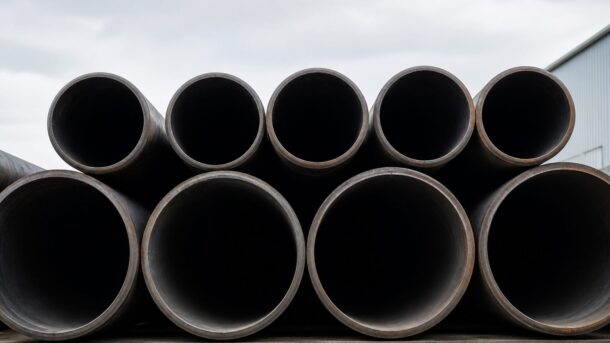
API 5L line pipe stacked in two diameter rows at a storage yard

If you have ever opened a line pipe enquiry and seen “API 5L X52 PSL2” without a second thought, stop and check: the grade and the product specification level are the two lines on your purchase order that decide whether the pipe you receive is allowed anywhere near a pipeline. API 5L is the American Petroleum Institute’s specification for line pipe — the steel pipe used to transport oil, gas, and water under pressure — and it is harmonized with the international standard ISO 3183. The short answer to the question “what grade do I need” is never a number in isolation. It is a combination of grade (how strong the steel must be) and PSL (how tightly that strength, chemistry, and toughness are controlled). This guide breaks both down, from Grade B to X70, in the order a buyer should think about them.

Key facts at a glance

  • API 5L line pipe is specified by two things together: a grade (B, X42, X52 … X70 and beyond) and a product specification level (PSL1 or PSL2).
  • The number after the X is the minimum yield strength in thousands of pounds per square inch — X52 means a minimum yield strength of 52,000 psi (about 359 MPa).
  • Grade B predates the X system and carries a minimum yield of about 35,000 psi (245 MPa).
  • PSL2 is the stricter level: tighter chemistry, capped maximum strengths, carbon-equivalent limits, and mandatory impact testing where specified — the default for modern cross-country pipelines.
  • Higher grades are not “better”; they allow thinner walls at the same pressure. That brings weldability, fracture-control, and cost consequences you must design for.
  • The manufacturing route (ERW, seamless, or LSAW) is independent of grade — the same X52 grade can be made by any of the three routes if the mill is qualified.

What the grade number actually means

API 5L grades are shorthand for minimum yield strength. Take X52: the X signals “line pipe grade” and the 52 means the steel must deliver at least 52,000 psi (about 359 MPa) yield strength in the specified testing direction. The same logic runs through the whole family — X42, X46, X52, X56, X60, X65, X70 — each step up the ladder is roughly 5,000 to 7,000 psi of additional minimum yield. Grade B is the odd one out: it predates the X naming system and behaves like a 35,000 psi grade, which is why it appears on so many water and general-service orders.

The table below shows the minimum yield strength (YS) and minimum tensile strength (TS) for the grades you will actually see quoted, in megapascals with approximate psi. These are the API 5L minimums that mills certify against — the values on your mill test certificate must meet or exceed them.

Grade Min. yield (MPa / approx. psi) Min. tensile (MPa / approx. psi) Typical line-pipe duty
B 245 / 35,000 415 / 60,000 Water transmission, general low-pressure service
X42 290 / 42,000 415 / 60,000 Water and gas distribution, gathering lines
X46 317 / 46,000 434 / 63,000 Medium-pressure distribution
X52 359 / 52,000 455 / 66,000 The transmission workhorse: gas, crude, product
X56 386 / 56,000 490 / 71,000 Higher-pressure transmission
X60 414 / 60,000 520 / 75,000 Long-distance gas and crude trunk lines
X65 448 / 65,000 535 / 78,000 Offshore and onshore high-pressure lines
X70 485 / 70,000 570 / 83,000 Large-diameter high-pressure gas transmission

Grades above X70 (X80 and beyond) exist and are used on specialist long-distance projects, but they demand fracture-mechanics engineering, controlled rolling or heat treatment at the mill, and stricter welding control on site. For the overwhelming majority of commercial enquiries, Grade B through X70 is the full range you need to reason about.

PSL1 vs PSL2: the control level nobody should skip

Two pipes can both be stamped X52 and still be very different products, because API 5L divides every grade into two product specification levels. PSL1 is the base level — minimum strength, standard chemistry, routine testing. PSL2 layers on engineering controls that matter when a failure is not acceptable:

  • Capped maximum strengths. PSL1 sets only minimums. PSL2 also sets maximum yield and tensile values, because pipe that is too strong for its design can be as dangerous as pipe that is too weak — over-matching steel complicates girth-weld qualification and can shift failure modes.
  • Tighter chemistry. PSL2 imposes stricter limits on elements such as carbon, sulfur, and phosphorus, and adds maximum carbon-equivalent (CE) requirements that rise with grade. Lower carbon equivalent means the pipe welds more predictably on site.
  • Impact toughness. Charpy V-notch testing of the base material — and for welded pipe, of the weld zone — is a standard expectation on PSL2 orders, giving you a number for fracture resistance at a defined test temperature instead of a hope.
  • Traceability and documentation. PSL2 demands more rigorous inspection, marking, and certification trails. Your mill test certificate must state the PSL, and each heat’s chemistry and mechanical results are verifiable back to production records.

When do you need which? Distribution water lines and non-critical services frequently run PSL1. Cross-country transmission lines, high-pressure gas, offshore tie-ins, and anything crossing populated areas are specified PSL2 almost without exception — many national pipeline codes simply will not accept PSL1 for their mainline. Buyers also use PSL2 as a quality floor when they cannot visit the mill, because the tighter testing regime is a practical proxy for process control. And if your service is sour (hydrogen sulfide present), the specification does not stop at PSL: confirm with your engineer that the material also meets the sour-service requirements of ISO 15156 (NACE MR0175) before you order — grade alone does not protect you from sulfide stress cracking.

One caution from the field: some suppliers quote “API 5L X52” and let the PSL stay ambiguous until the paperwork arrives. Make the PSL a contract term, not a conversation. An X52 PSL1 pipe is not a substitute for X52 PSL2 unless your design and code allow it — the chemistry and toughness are different products, not a clerical detail.

Choosing a grade: work from pressure backward

The correct way to select a grade is to work backward from the design: the allowable pressure of a pipeline rises with wall thickness and with steel strength, so a higher grade mainly buys you a thinner wall — and therefore less steel, less welding, and lower transport cost — at the same operating pressure. That is why X70 dominates long-distance gas trunk lines where every millimeter of wall thickness multiplied by hundreds of kilometers is real money, and why Grade B still wins on short water mains where pressure is low and the cheapest adequate pipe is the right pipe.

Four questions settle most grade decisions:

  1. What is the design pressure and diameter? Run the wall-thickness calculation (Barlow’s equation is the familiar starting point: allowable pressure scales with strength and wall, and inversely with diameter). If the computed wall lands in a standard schedule with room to spare, you have your candidate grades.
  2. What does the governing code or project spec demand? Pipeline codes frequently set minimum grades, maximum allowable stresses, and fracture-toughness requirements per class location. Your spec is not a suggestion — it is the first filter.
  3. What is the fluid and environment? Sour gas, CO2, seawater exposure, and extreme service temperatures each pull you toward specific grades, PSL2, and supplementary requirements. Sweet, dry service is far more forgiving.
  4. Can your contractor weld it? Every grade jump changes welding procedure qualification, preheat, and inspection. An X70 line needs an X70-qualified crew; specifying X70 for a job that X52 handles cleanly is how projects acquire expensive field rework.

Once the grade and PSL are fixed, the manufacturing route is the next decision — and the two are independent. Your X52 or X70 can be produced as ERW, seamless, or LSAW depending on diameter, quantity, and route economics. If you have not yet worked through which of those routes fits your project, our earlier guide to ERW, seamless and LSAW pipe is the natural companion to this one: the grade sets the metallurgy while the route sets the geometry, the seam, and the inspection burden.

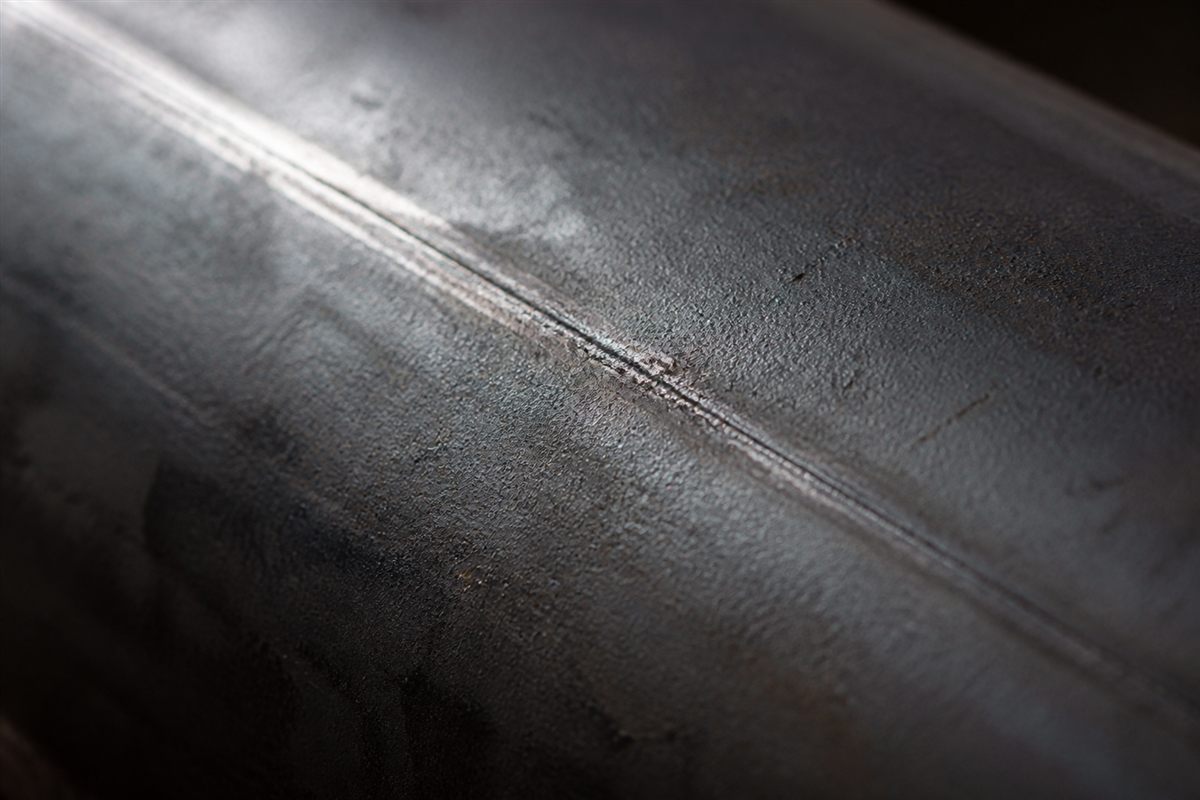
Straight longitudinal weld seam on ERW line pipe

Wall thickness completes the picture: specify OD × WT × grade

A line pipe purchase order is not complete as “X52”. Mills quote and price by the full composition: outside diameter, wall thickness, grade, and PSL — for example 406.4 mm × 9.53 mm API 5L X52 PSL2, or the equivalent 16 in × 0.375 in. The wall thickness is where grade choice shows up financially. At a fixed design pressure, moving from X52 to X70 can allow a thinner wall that still passes the stress calculation, and because wall thickness drives tonnage — and tonnage drives price — the “expensive” grade sometimes wins on total landed cost once freight and installation are included.

Thinner walls are not free, though. They bring less stiffness for handling, tighter ovality tolerances through transport and storage, more care in field bending, and welding procedures with lower heat input. Remember also that design codes cap how much of the steel’s nominal yield a design may use — a design factor around 0.72 is common for onshore lines — so the certified minimum is never fully available to the calculation. Finally, the ordered wall should make room for corrosion allowance and for any end preparation or threading your connections need. When a supplier asks you to confirm “only the grade”, treat that as a warning flag: the wall and the grade are bought together, and an enquiry that names one without the other is an unfinished specification.

The paperwork that closes the deal

API 5L pipe is bought on documents as much as on steel. Before payment, your supplier should provide a mill test certificate to EN 10204 3.1 that states, at minimum: the standard and grade (for example API 5L X52 PSL2), the heat number, full chemical analysis, yield and tensile values, and the results of the required tests — hydrostatic testing on every length, and for PSL2, the Charpy impact results at the specified temperature. Cross-check the certificate against the stenciling on the pipe itself; they should match heat for heat. If a supplier cannot produce this paperwork before you pay, the price is not low enough to make up for it. This discipline matters even more on Gulf and Middle East projects, where contractor vendor-approval systems will reject a shipment whose certificates do not trace back to an approved mill.

FAQ

What does the X in X52 mean? It marks an API 5L line pipe grade; the number is the minimum yield strength in thousands of psi. X52 = 52,000 psi minimum yield (about 359 MPa).

Is Grade B an X-grade? No. Grade B predates the X system and is treated as a separate grade with roughly 35,000 psi minimum yield. It is common on water and general-service lines where higher strength buys nothing.

What is the difference between X42 and X70 in practice? About 40,000 psi of minimum yield — which in practice means X70 lines can run at higher pressure with thinner walls, but demand more demanding welding control and higher material cost. Choose the lowest grade the design allows.

PSL1 or PSL2 — which should I buy? Follow your code and design. If the project does not specify, PSL2 is the safer commercial default for pressure service because of its capped strengths, chemistry limits, and impact testing; PSL1 remains legitimate for low-risk distribution duty.

Can X52 PSL1 be substituted for X52 PSL2? Only if your engineering review and code accept it. The PSL is part of the product definition, and PSL2’s maximum-strength and toughness requirements exist for a reason.

Do higher grades weld differently? Yes. Higher grades need qualified procedures, controlled heat input, and often preheat — which is why matching the grade to the contractor’s capability is part of the buying decision, not an afterthought.

How should I phrase a line pipe enquiry so suppliers price it correctly? Give the full product definition: outside diameter and wall thickness, grade and PSL (for example API 5L X52 PSL2), standard edition, length, end finish (plain or beveled), coating, quantity, and destination port. A vague enquiry invites substitution risk at the quoting stage, where it is hardest to detect.

Can a high grade like X70 be used for a water pipeline? Technically yes, but it is rarely economical. Water mains typically run Grade B to X42, where pressure and diameter are modest; specifying X70 for a water line pays for strength the design never uses and complicates welding for no benefit. Match the grade to the duty, not to fashion.

Bottom line

  • Specify grade and PSL together, in writing: “API 5L X52 PSL2” is one product; “X52” alone is an argument waiting to happen.
  • Work backward from pressure, diameter, and code: the lowest grade that passes the design is the commercially correct grade.
  • Remember that grade and manufacturing route are independent variables — decide both, deliberately.
  • Treat the mill test certificate as part of the pipe: EN 10204 3.1 documentation, hydrostatic results, and PSL2 impact data must match the stenciling before money moves.
  • On sour or critical service, grade is necessary but not sufficient — confirm ISO 15156 (NACE MR0175) compliance and the project’s supplementary requirements with your engineer.

If you are building a line-pipe specification from scratch, start with our Steel Pipe Guide series, where the grades above meet schedules, tolerances, and the checks you should run at the port.

ERW vs Seamless vs LSAW Steel Pipe: Which One Belongs in Your Specification?

ERW, seamless and LSAW steel pipe comparison

I have lost count of the enquiries that start with “carbon steel pipe, please quote” and nothing else. The pipe is the easy part; the manufacturing method is where the spec actually lives. ERW, seamless, and LSAW pipes all carry carbon steel chemistry, all come with mill certificates, and all are the wrong choice somewhere. Over fifteen years of buying pipe for infrastructure projects, I have learned that the question is never “which is the best steel pipe” — it is “which route fits the diameter, the pressure, the budget, and the inspection regime your project demands.” This is how I work through that choice.

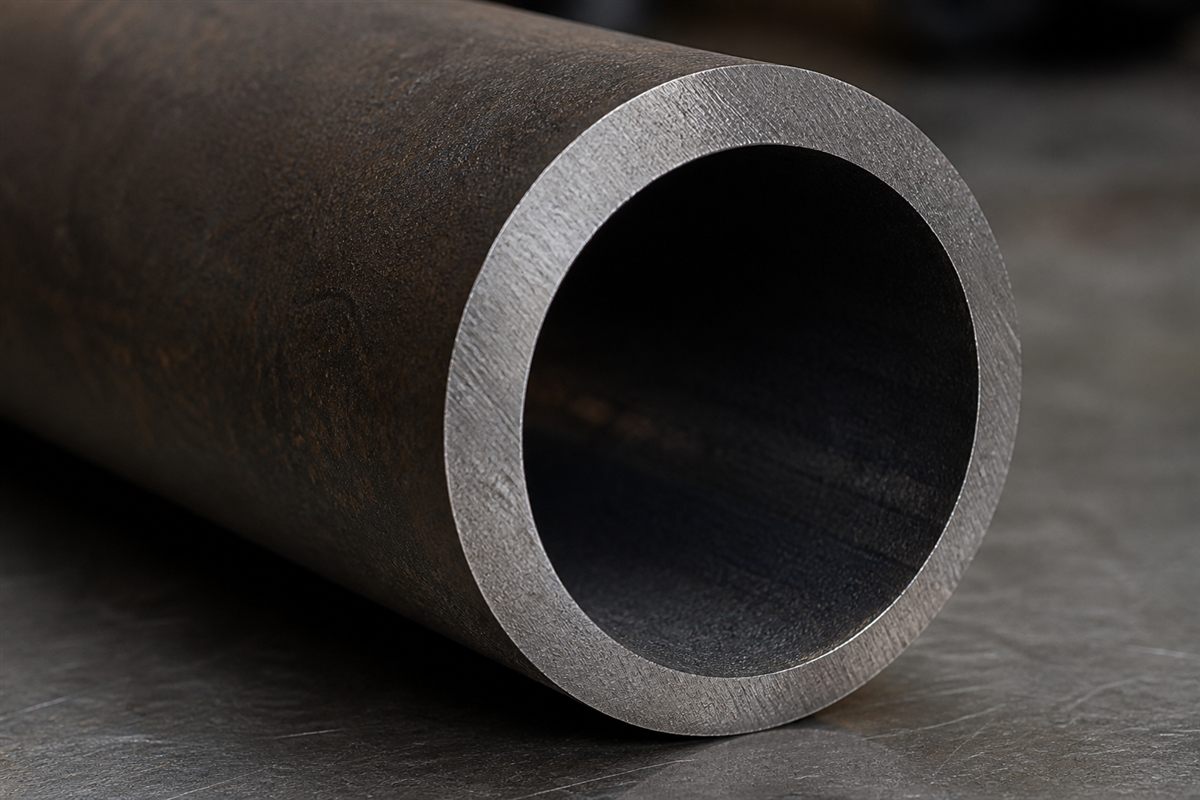
steel pipe end wall thickness

Three manufacturing routes, one question

All three processes start from the same family of hot-rolled steel, but they become pipe in fundamentally different ways, and the seam — or the absence of one — drives almost every downstream decision.

ERW (electric resistance welded). Coiled strip is roll-formed into a cylinder and its two edges are joined by high-frequency electric resistance welding. The weld is a forged bond with no added filler metal, and in a good mill the weld zone is tested, normalized, and barely visible after processing. ERW is the volume workhorse of the pipe world: fast production, competitive pricing, and typical outside diameters from about half an inch up to roughly 24 inches.

Seamless. A solid round billet is heated and pierced to form a hollow shell, then rolled and stretched to final size — no longitudinal weld exists anywhere in the wall. Because the whole circumference is parent material, seamless pipe is the default where pressure, temperature, or fatigue make a weld zone unacceptable. The trade-off is cost and lead time: seamless is slower to make and typically the most expensive of the three routes per ton.

LSAW (longitudinally submerged arc welded). Heavy steel plate is edge-prepared, formed into a cylinder, and welded along one longitudinal seam with submerged arc welding — usually from both the inside and the outside (which is why you will also hear the term DSAW). Plate input means LSAW starts where strip-based ERW ends, commonly from roughly 16 inches in diameter upward, and it is the standard route for large-diameter transmission pipelines and heavy structural duty.

ERW: the workhorse, with a seam you should respect

ERW is what most structural and general-service pipe is made from, and much of it is specified under ASTM A53 or ASTM A36 — the A36 ERW structural pipe used in racks, frames, and fences, and the A53 pipe used across water, air, and general pressure services. It is also an accepted manufacturing route under API 5L for line pipe in a wide range of grades, from Grade B up through the X-grades.

Three things make ERW the default in my purchase orders:

  • Cost and lead time. Coil-fed production keeps per-ton cost and delivery time well below seamless, which matters when you are buying in project quantities.
  • Consistent geometry. Modern high-frequency welding produces pipe with tight diameter and roundness tolerances, which makes fit-up on site faster.
  • A testable weld. Reputable mills run the weld zone through eddy-current or ultrasonic testing as part of production, and hydrostatic testing verifies every length. Ask for those reports; they should travel with the MTC.

The respect part: the seam is still a seam. For highly corrosive, sour, or high-cycle-fatigue services, buyers routinely step up to seamless or specify additional NDT — and some project specs will not allow ERW at all. Read the spec before you assume.

Seamless: when the seam cannot exist

ASTM A106 (Grades A, B, and C) is the specification you will see on most seamless carbon steel pipe bought for high-temperature and high-pressure service — boiler and heat-exchanger duty, power and process lines, and anywhere a weld zone would be a liability under cyclic loading. Seamless pipe is also common in the smaller-to-medium diameter range where it is produced efficiently.

What you pay for with seamless is uniform wall integrity around the full circumference. There is no seam to inspect, no weld to derate, and the pipe can be specified against the most demanding pressure and temperature calculations. That premium is justified when the service demands it, and wasted when it does not — putting seamless on a fence-line structural order is how budgets die quietly.

LSAW: big diameters, big pipelines

When the project calls for a 30-inch or 48-inch transmission line, strip-based ERW is out of its range and seamless is economically impossible. That is LSAW territory. Starting from plate gives LSAW mills the ability to reach diameters well beyond 24 inches while keeping wall thickness controlled through heavy sections — which is why large-diameter API 5L line pipe, offshore risers, and structural piles are almost always LSAW or its spiral cousin SSAW.

Because LSAW welds are made with submerged arc from both sides, the weld is deep, dense, and radiographically inspectable, and long-distance pipeline specifications routinely require 100% ultrasonic or radiographic examination of the seam. It is not a cheap pipe, but at large diameters there is often no practical alternative.

How to choose: a buyer’s decision table

Decision factor ERW Seamless LSAW
Typical diameter range ~1/2″ – 24″ ~1/4″ – 24″ (larger sizes costly) ~16″ and up
Typical specs ASTM A53, A36; API 5L ASTM A106; API 5L; A53 API 5L; structural/line pipe
Weld seam Longitudinal HF weld None Longitudinal SAW (inside + outside)
Relative cost per ton Lowest Highest High (large dia.)
Lead time Shortest Longest Medium-long (plate-based)
Typical duty Structural, water, general pressure High-temp / high-pressure, boiler & process Transmission lines, heavy structural, offshore
Key inspection Eddy current / UT on weld + hydro Hydrostatic; UT as specified 100% UT or RT on seam (pipeline spec)

Work the decision with four questions:

  1. What diameter and wall do you actually need? The size range alone usually eliminates one or two routes.
  2. What pressure and temperature will the line see? High pressure or high temperature pushes you toward seamless (or LSAW with full inspection at large size).
  3. What does the project specification require? Many specs name the manufacturing route outright — A106 for process lines, A53 or API 5L for distribution, A36 for structural — so read clause one before comparing prices.
  4. What inspection regime is attached? If the spec demands full radiographic testing of every seam, factor that into the ERW versus seamless decision rather than discovering it at the port.

Do not forget the paperwork

Whatever route you choose, the documents are half the purchase. Every shipment should carry a mill test certificate to EN 10204 3.1 — check that the heat number, grade, chemistry, and mechanical values on the certificate match the stenciling on the pipe. Hydrostatic test reports, NDT reports for welded pipe, and dimensional records (outside diameter, wall thickness, straightness) should all be available before money moves. A cheap pipe with unverifiable paperwork is the most expensive pipe you will ever buy, because it will not clear a project’s vendor approval.

FAQ

Is ERW pipe as strong as seamless?
For most structural and general pressure service, yes — specified grades are met either way. The difference is not headline strength but weld-zone behaviour under severe conditions: high temperature, sour or corrosive service, and cyclic loading are where seamless earns its keep.

Can ERW pipe be used under API 5L?
Yes. API 5L explicitly covers electric resistance welded line pipe alongside seamless and SAW routes, across PSL1 and PSL2 requirements. Check the grade, the PSL, and the supplementary testing the project calls for.

Why is seamless pipe so much more expensive?
Because it starts from a solid billet and is pierced and rolled rather than formed from strip. Slower throughput and higher material loss per ton make it cost more — which is why specifying it for jobs that do not need it is the most common budget mistake I see.

What is the difference between LSAW and SSAW?
Both are submerged arc welded from plate. LSAW welds along a single longitudinal seam; SSAW (spiral) welds along a helical seam. Longitudinal seams are generally preferred for long-distance line pipe service; spiral pipe is often used for lower-pressure large-diameter water and structural duty.

Do I need X-ray testing on welded pipe?
Only if your spec says so — but for critical service, treating weld inspection as optional is a gamble. Production NDT (eddy current or ultrasonic on ERW) and project-specified radiographic testing of LSAW seams are the two inspection layers that separate mill-grade pipe from project-grade pipe.

Bottom line

  • Match the route to the service: ERW for structural and general duty, seamless for high pressure and high temperature, LSAW for large-diameter transmission and heavy structural work.
  • Let the size range, the project spec, and the inspection regime narrow the field before you compare price.
  • The certificate is part of the product: verify EN 10204 3.1 mill test certificates, hydrostatic reports, and NDT records against the pipe itself.
  • A spec that names only “carbon steel pipe” is an unfinished document. Decide the manufacturing route first, and everything downstream — price, lead time, inspection — falls into line.

If you are working through pipe specifications for an upcoming project, you will find more depth in our steel pipe guide, where we break down schedules, standards, and what to check at the port.